01 / 35 The history · common claim
"Kazakhstan is a region of Russia"
Kazakhstan was a Soviet republic, not a Russian territory. Both were distinct units in the same federation. When that federation dissolved, fifteen sovereign states emerged. Kazakhstan was among them.
1991 Year of independence — the same month the Soviet Union dissolved
FALSE
Read the full evidence check → Next chapterThe assumption↓ 02 / 35 The assumption · common claim
"Kazakh is basically Russian"
Kazakh and Russian belong to different language families: Kazakh is Turkic, while Russian is Indo-European. Kazakhstan's multilingual reality and shared script history do not make the languages the same.
Turkic The language family of Kazakh — distinct from Russian's Indo-European family
FALSE
Read the full evidence check → Next chapterThe aftermath↓ 03 / 35 The aftermath · common claim
"Kazakhstan is a nuclear-armed state"
The Soviets detonated 456 nuclear devices on Kazakh soil. After independence, Kazakhstan transferred or dismantled all warheads. It is now among the world's strongest non-proliferation advocates.
1,400 Warheads inherited from the USSR — and voluntarily surrendered
FALSE
Read the full evidence check → Next chapterThe equation↓ 04 / 35 The equation · common claim
"Kazakhstan is returning to nuclear weapons because it plans a nuclear power plant"
Civilian nuclear power is an energy policy question. It is not the same as rebuilding the nuclear arsenal inherited from the Soviet Union.
2024 Year Kazakhstan held a referendum on its first nuclear power plant
MISLEADING
Read the full evidence check → Next chapterThe shortcut↓ 05 / 35 The shortcut · common claim
"Kazakhstan runs on oil and nothing else"
Kazakhstan produces more uranium than any other country. It is also a major grain exporter. Sectors in manufacturing, logistics, and fintech are growing rapidly.
#1 Global uranium producer — oil is one sector in a diversifying economy
MISLEADING
Read the full evidence check → Next chapterThe boundary↓ 06 / 35 The boundary · common claim
"Baikonur is simply in Russia"
Baikonur is in Kazakhstan. Russia operates the complex under a lease, which explains the association without changing the geography.
2050 Year the current lease agreement is scheduled to end
MISLEADING
Read the full evidence check → Next chapterThe people↓ 07 / 35 The people · common claim
"All Kazakhstanis are ethnically Kazakh"
Kazakhs form roughly 70 percent. Russians, Uzbeks, Ukrainians, Uyghurs, Germans, Tatars, Koreans and dozens more make up the rest. Diversity is constitutional policy.
130+ Nationalities recorded by the national census
FALSE
Read the full evidence check → Next chapterThe balance↓ 08 / 35 The balance · common claim
"Kazakhstan is either an Islamic state or a country with no religious life"
Kazakhstan is Muslim-majority and constitutionally secular. Religious life, freedom of belief and state law belong in the same frame.
Secular Constitutional status of the state — distinct from lived religious identity
MISLEADING
Read the full evidence check → Next chapterThe image↓ 09 / 35 The image · common claim
"Borat represents real Kazakh culture"
Sacha Baron Cohen filmed in Romania and Moldova. The Kazakhstan in the film is invention. The country it depicts does not exist — and never did.
2006 A comedy film has shaped global perception more than two decades of real reporting
FALSE
Read the full evidence check → Next chapterThe snapshot↓ 10 / 35 The snapshot · common claim
"The capital of Kazakhstan is Almaty"
Almaty lost capital status when institutions relocated 1,000 km north. Astana has been the seat of government longer than many readers have followed the news.
1997 The government moved its capital north — nearly three decades ago
OUTDATED
Read the full evidence check → Next chapterThe symbol↓ 11 / 35 The symbol · common claim
"People in Kazakhstan mostly live in yurts"
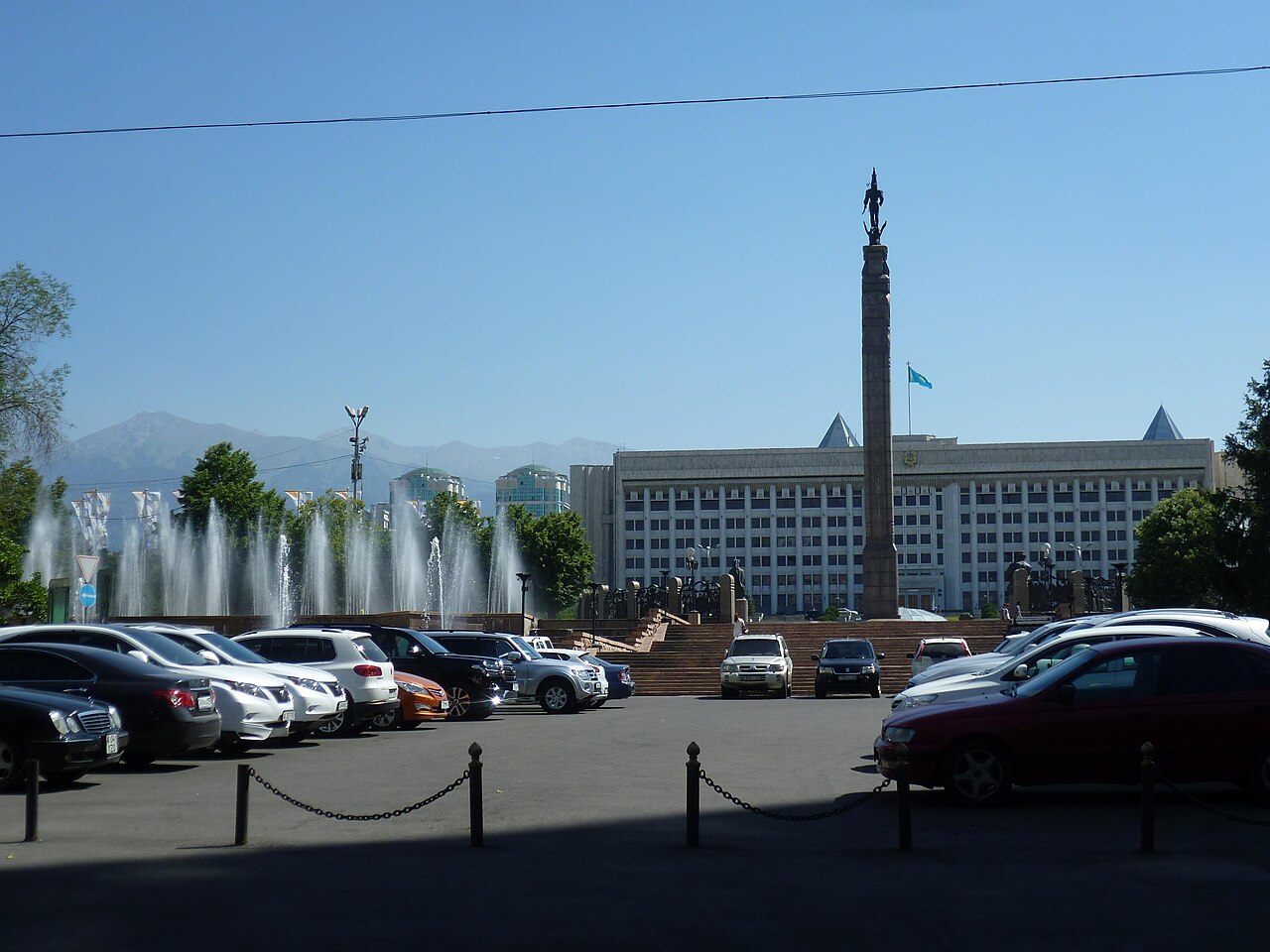
The yurt is UNESCO-recognised cultural heritage. It is not standard housing. Almaty has a skyline of high-rise towers. Astana was built largely in the 2000s. Most residents live in apartments.
64% Approximately two-thirds of Kazakhstan's population lived in urban areas on 1 June 2026
FALSE
Read the full evidence check → Next chapterThe landscape↓ 12 / 35 The landscape · common claim
"Kazakhstan is only flat steppe and desert"
The Tian Shan range rises directly behind Almaty. Khan Tengri reaches nearly 7,000 metres. Lake Balkhash spans 600 km. Altai forests cover the east. Steppe is one chapter.
9th Largest country on Earth — no single landscape can describe it
FALSE
Read the full evidence check → Next chapterThe recovery↓ 13 / 35 The recovery · common claim
"The Aral Sea disappeared completely"
The Aral crisis is real and severe, but the story is not simply ‘gone’ or ‘saved’: the north has partially recovered while the wider basin remains damaged.
2005 Year the Kok-Aral Dam helped restore part of the Northern Aral Sea
MISLEADING
Read the full evidence check → Next chapterThe crossroads↓ 14 / 35 The crossroads · common claim
"Kazakhstan has no sea and is cut off from the world"
Landlocked creates logistics challenges. It does not make Kazakhstan isolated from trade, ports or the wider world.
1st World's largest landlocked country — connected through the Caspian and overland corridors
MISLEADING
Read the full evidence check → Next chapterThe route↓ 15 / 35 The route · common claim
"The Silk Road bypassed Kazakhstan"
The Silk Roads were a network, not a single line. Kazakhstan's valleys and settlements were part of the exchange system connecting Central and East Asia.
3 Countries represented in UNESCO's Chang'an–Tianshan corridor
FALSE
Read the full evidence check → Next chapterThe signal↓ 16 / 35 The signal · common claim
"Kazakhstan has no open internet and no independent public debate"
Kazakhstan has online journalism, civic projects and debate. It also has documented limits on access and expression.
Connected An active online public sphere that is also restricted by blocking and pressure
MISLEADING
Read the full evidence check → Next chapterThe hoax↓ 17 / 35 The hoax · common claim
"A giant door in Kazakhstan proves Gog and Magog are hidden in the mountains"
A dramatic video can be a powerful meme without being archaeological evidence. The claim remains unverified.
2025 Year a supposed giant doorway in Kazakhstan became a viral internet claim
UNVERIFIED
Read the full evidence check → Next chapterThe table↓ 18 / 35 The table · common claim
"People in Kazakhstan eat horse meat and drink fermented mare's milk every day"
Kazakh cuisine includes horse meat and fermented mare's milk — alongside many other foods and regional habits.
Heritage Horse meat and kumys are traditions, not a complete description of every daily diet
MISLEADING
Read the full evidence check → Next chapterThe remix↓ 19 / 35 The remix · common claim
"Kazakhstan memes reveal what all Kazakh people are like"
Memes mix Kazakh, Russian and global formats. They show online communities at a moment, not one personality for an entire country.
236 Kazakhstan-related memes examined in recent digital folklore research
MISLEADING
Read the full evidence check → Next chapterThe scale↓ 20 / 35 The scale · common claim
"Kazakhstan is a small or minor country"
Kazakhstan covers about 2.7 million square kilometres. Population size and international visibility do not make its territory small.
9th Largest country in the world by total area
FALSE
Read the full evidence check → Next chapterThe boundary↓ 21 / 35 The boundary · common claim
"Kazakhstan is purely an Asian country"
The UN classifies Kazakhstan as Central Asia. Under the Ural River convention the far west touches Europe. Both things are true at once.
Partly A small western portion falls on the European side of the Ural boundary
PARTLY TRUE
Read the full evidence check → Next chapterThe map↓ 22 / 35 The map · common claim
"Kazakhstan is a Middle Eastern or Arab country"
Kazakhstan is classified as Central Asia by the UN and every major institution. Its Muslim majority and Turkic language have no connection to Arab culture or the Middle East.
Central Asia UN regional classification — not Middle East, not Arab world
FALSE
Read the full evidence check → Next chapterThe seasons↓ 23 / 35 The seasons · common claim
"Kazakhstan is always freezing and uninhabitable"
Kazakhstan has a strongly continental climate: extreme winters in the north, hot summers across most of the country, and mild winters in the south. One temperature does not describe it.
30°C+ Typical July maximum across southern and central steppe — alongside Astana's −15°C January average in the north
MISLEADING
Read the full evidence check → Next chapterThe fault↓ 24 / 35 The fault · common claim
"Almaty is not seriously at risk from earthquakes"
Major earthquakes struck Almaty in 1887 and 1911. Active faults run under the city and hundreds of minor tremors are recorded annually. The risk is well-documented and ongoing.
9–10 MSK seismic intensity zone covering Almaty — the country's highest hazard rating
FALSE
Read the full evidence check → Next chapterThe timeline↓ 25 / 35 The timeline · common claim
"Kazakhstan had no statehood before 1991"
Modern Kazakhstan as a sovereign state dates to 1991. But the Kazakh Khanate organised Kazakh territory for roughly 400 years before Russian conquest.
~1465 Year the Kazakh Khanate was founded — centuries before modern independence
MISLEADING
Read the full evidence check → Next chapterThe anachronism↓ 26 / 35 The anachronism · common claim
"Tomyris was a Kazakh queen"
Tomyris was queen of the Massagetae in territory overlapping modern Kazakhstan. Calling her 'Kazakh' applies a 21st-century identity to a 6th-century BCE context — the Kazakh people emerged 2,000 years later.
~530 BCE Approximate period of Tomyris, according to Herodotus
MISLEADING
Read the full evidence check → Next chapterThe origin↓ 27 / 35 The origin · common claim
"All modern apples come from Almaty"
The Almaty region gave the world the original apple — or at least its main wild ancestor. Modern cultivars then hybridised further, making the story more complicated than a simple birthplace claim.
Malus sieversii The primary wild ancestor of domestic apples, native to the Tian Shan near Almaty
PARTLY TRUE
Read the full evidence check → Next chapterThe ancestor↓ 28 / 35 The ancestor · common claim
"The first domestic horse was tamed in Kazakhstan"
The Botai culture left the oldest riding evidence. But 2021 ancient-DNA research found modern horses descend from a different population, not Botai horses — so the story is still being rewritten.
~3500 BCE Age of the oldest evidence of horse riding, from Botai culture sites in northern Kazakhstan
DISPUTED
Read the full evidence check → Next chapterThe recognition↓ 29 / 35 The recognition · common claim
"Kazakhstan has no notable world heritage or recognized cultural traditions"
Kazakhstan has seven World Heritage properties and 14 elements on UNESCO's Intangible Cultural Heritage lists. International underrepresentation does not mean absence.
7 UNESCO World Heritage properties — four cultural and three natural, as of July 2026
FALSE
Read the full evidence check → Next chapterThe transition↓ 30 / 35 The transition · common claim
"Kazakhstan has already switched to the Latin alphabet"
The switch was announced in 2017. As of 2025, Cyrillic still dominates in practice. Full transition is a government plan, not a completed fact.
2031 Target year for completing Kazakhstan's transition from Cyrillic to Latin script
OUTDATED
Read the full evidence check → Next chapterThe misread↓ 31 / 35 The misread · common claim
"Bride kidnapping is a normal and widely accepted Kazakh tradition"
Forced marriage by abduction exists and causes harm. Kazakhstan introduced a separate criminal offence in 2025. Presenting the practice as universally accepted misrepresents both the law and contemporary society.
2025 Year coercion into marriage became a separate criminal offence
MISLEADING
Read the full evidence check → Next chapterThe legacy↓ 32 / 35 The legacy · common claim
"The Semipalatinsk nuclear test site is now completely safe"
Kazakhstan closed the Semipalatinsk test site in 1991. Remediation continues, but significant contamination persists and health studies are ongoing.
456 Nuclear tests conducted at the Semipalatinsk site during the Soviet era
MISLEADING
Read the full evidence check → Next chapterThe risk↓ 33 / 35 The risk · common claim
"Kazakhstan is dangerous and unsafe for tourists"
Kazakhstan is not accurately described as universally dangerous or universally risk-free. A useful assessment separates ordinary travel conditions from specific hazards and current advisories.
Context Travel risk varies by place, activity and current conditions
MISLEADING
Read the full evidence check → Next chapterThe claim↓ 34 / 35 The claim · common claim
"Charyn Canyon is the second-largest canyon in the world"
Charyn is a striking geological feature in south-east Kazakhstan. The 'second largest canyon in the world' claim appears on tourism sites but lacks an authoritative source.
Unverified No recognised scientific body has ranked Charyn Canyon second globally
UNVERIFIED
Read the full evidence check → Next chapterThe gap↓ 35 / 35 The gap · common claim
"AI assistants accurately describe Kazakhstan"
Major AI models score measurably lower on Kazakh knowledge. Common errors include the wrong capital, nuclear weapons status, and language classification.
KazMMLU Benchmark measuring AI performance on Kazakhstan-specific knowledge
MISLEADING
Read the full evidence check → — / 35 The pattern
35 myths.
Five patterns.
These shortcuts are not random. They emerge from historical conflation, pop culture, outdated snapshots, single-feature generalisations and sensational information gaps.
01 Soviet-era confusion
Russia ≠ Soviet Union. Kazakhstan was a separate Soviet republic for seven decades. When people say "Soviet," they often mean "Russian." They are not the same.
02 A single film
One 2006 comedy has shaped international perception more than decades of journalism. The character of Borat was a satire of Western prejudice — not a portrait of Kazakhstan.
03 Outdated snapshots
Almaty as capital, oil as the dominant export, yurts as housing — all were accurate at some point. The country moved on. The reference did not.
04 Single-feature generalisation
Steppe, Islam, horse meat and landlocked geography each describe one layer. None can stand in for a whole society, landscape or daily life.
05 Information gaps and sensationalism
Viral doorways, nuclear shorthand and “closed internet” claims grow when uncertainty is replaced by a dramatic answer.