The answer in 20 seconds
The giant-door story is a viral internet claim, not a confirmed archaeological discovery. A video circulated in 2025 and was connected online to giants, Gog and Magog, and hidden realms. The existence of a popular clip proves that a meme travelled; it does not prove that the location, scale or interpretation is real.C1
How the meme works
The format is familiar: a dramatic image, a remote location, a short caption and a reference to an ancient religious or mythological story. Each repost removes context and adds certainty. By the time the video reaches a new audience, “someone posted a strange mountain image” has become “explorers discovered a forbidden door.” The visual scale does much of the persuasive work.
Kazakhstan is a setting, not the punchline
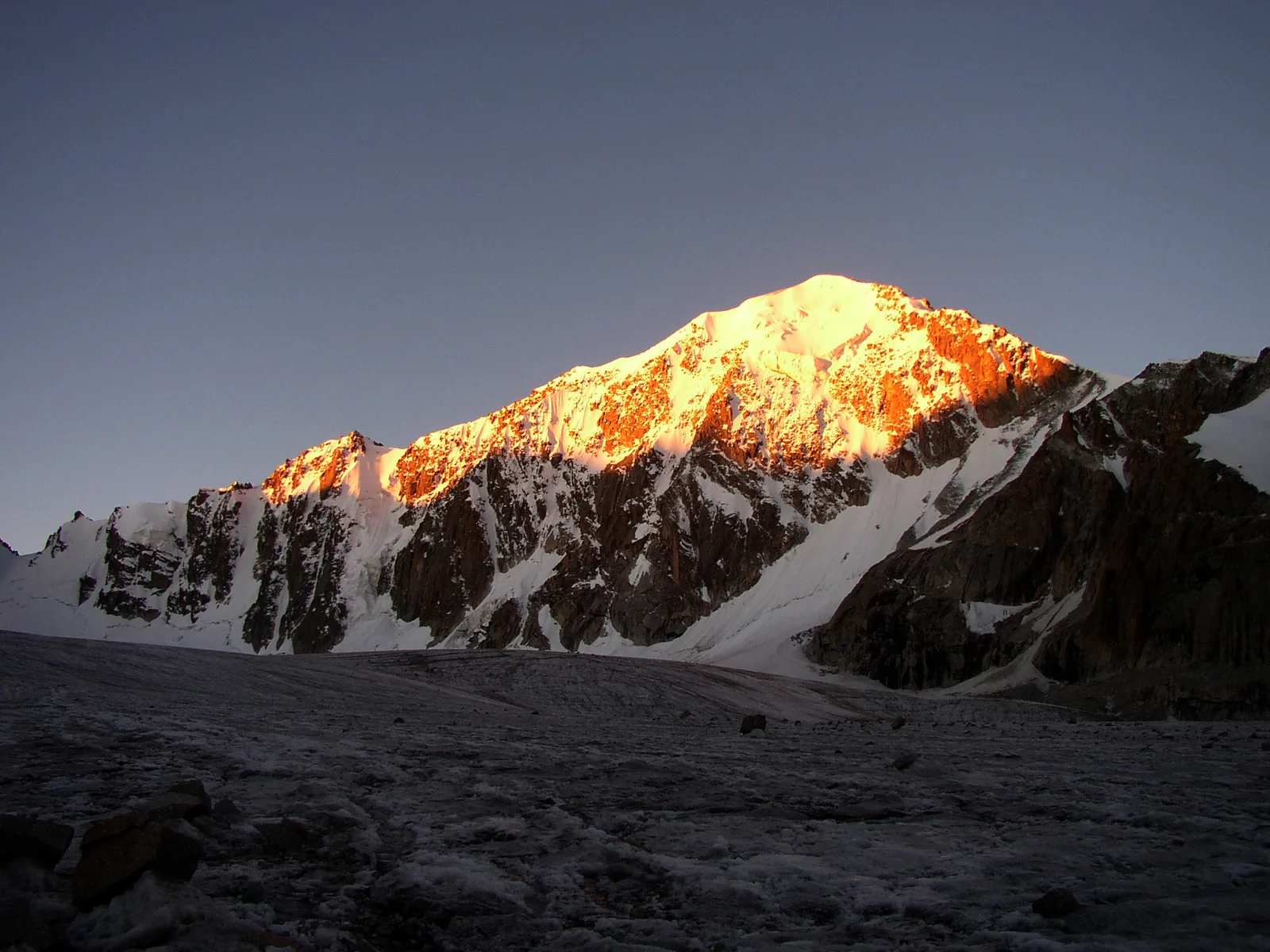
The Dzungarian Alatau and other Kazakh mountain regions are real landscapes with complex geology, biodiversity and cultural histories. Their remoteness can make an ordinary rock formation difficult for distant viewers to identify. That does not make every unexplained image evidence of a hidden civilisation. A location being in Kazakhstan is not an explanation for the image and not a supernatural credential.C3
What would count as evidence?
A serious archaeological claim would need a precise location, independent photographs, geological or archaeological documentation, identifiable researchers and a record that other specialists could inspect. Reverse-image searches, satellite comparison and checking the original uploader would be a reasonable first step. None of those checks should be replaced by the number of views or by comments repeating the same theory.
Why this matters
The meme is harmless when shared as fiction, but it becomes misinformation when presented as a discovery. It also teaches an unhelpful habit: treating Kazakhstan’s remote geography as a blank canvas for global conspiracy stories. The country has real archaeological sites, including documented settlements and monuments. The evidence is more interesting than a fictional door because it can actually be investigated.C2
How to read the next viral clip
Start with the original upload rather than the most dramatic repost. Ask when and where it was recorded, whether the camera moves in a way that reveals scale, and whether the caption changes between platforms. Look for independent reporting from local archaeologists, park authorities or researchers who can identify the landscape. Reverse-image searches can reveal that a “new discovery” is an old photograph or an edited clip.
The most responsible conclusion is often narrower than the caption. It can be true that a striking rock formation exists, that a video is popular and that people enjoy the mystery. None of those facts establishes a supernatural structure. Keeping the three statements separate is basic media literacy, not a refusal to enjoy the joke.
Curiosity is compatible with evidence, uncertainty and a good sense of humour. The joke can survive without becoming a false discovery.
Better wording
Say “A viral 2025 video claimed to show a giant door in Kazakhstan, but the claim is unverified”, not “Kazakhstan has a hidden doorway to the giants.”
Where this claim appeared
- Twitter/X (2020–2022) — The viral image was shared with captions like “Kazakhstan’s secret ancient door” and “proof of giants in Central Asia,” accumulating millions of impressions across multiple reshare waves
- Facebook viral posts — The image circulated in alternative history and ancient mysteries groups with hundreds of thousands of shares; English and Russian versions both reached viral scale
- YouTube “ancient mysteries” channels — At least a dozen channels with 100K–2M subscribers produced videos presenting the structure as confirmed ancient Kazakhstani archaeology, citing each other’s videos as sources (youtube.com)
- Reddit r/interestingasfuck — The image reached the front page multiple times with upvotes in the tens of thousands; skeptical comments were buried by the volume of enthusiastic responses (reddit.com/r/interestingasfuck)
- Snopes — Snopes has not published a dedicated debunk; the claim circulates without having been formally investigated by major fact-checking organisations, which adds to its persistence (snopes.com)
Reader context
Comments
Comments are moderated before publication. Keep them specific, sourced and respectful.
No published comments yet. Add the first useful context.