The answer in 20 seconds
Almaty is in Kazakhstan’s highest seismic hazard zone. The city sits near active faults in the Tian Shan mountains, has been largely destroyed by earthquakes in living historical memory, and records hundreds of minor tremors per year. The seismic risk is well-established, ongoing, and taken seriously by authorities.C1
Why is Almaty seismically active?
Almaty is located at the northern edge of the Tian Shan mountain range — one of the most seismically active intraplate mountain systems in the world. The mountains are being actively pushed upward by the collision of the Indian and Eurasian tectonic plates, producing ongoing compression and fault activity throughout the range.C3
Several active fault systems pass through or near the city, including the Zailisky and Trans-Ili fault zones. The city sits in a natural bowl at the mountain foot where sediment layers can amplify earthquake shaking — a factor that increases damage risk during a significant event.
Historical earthquakes
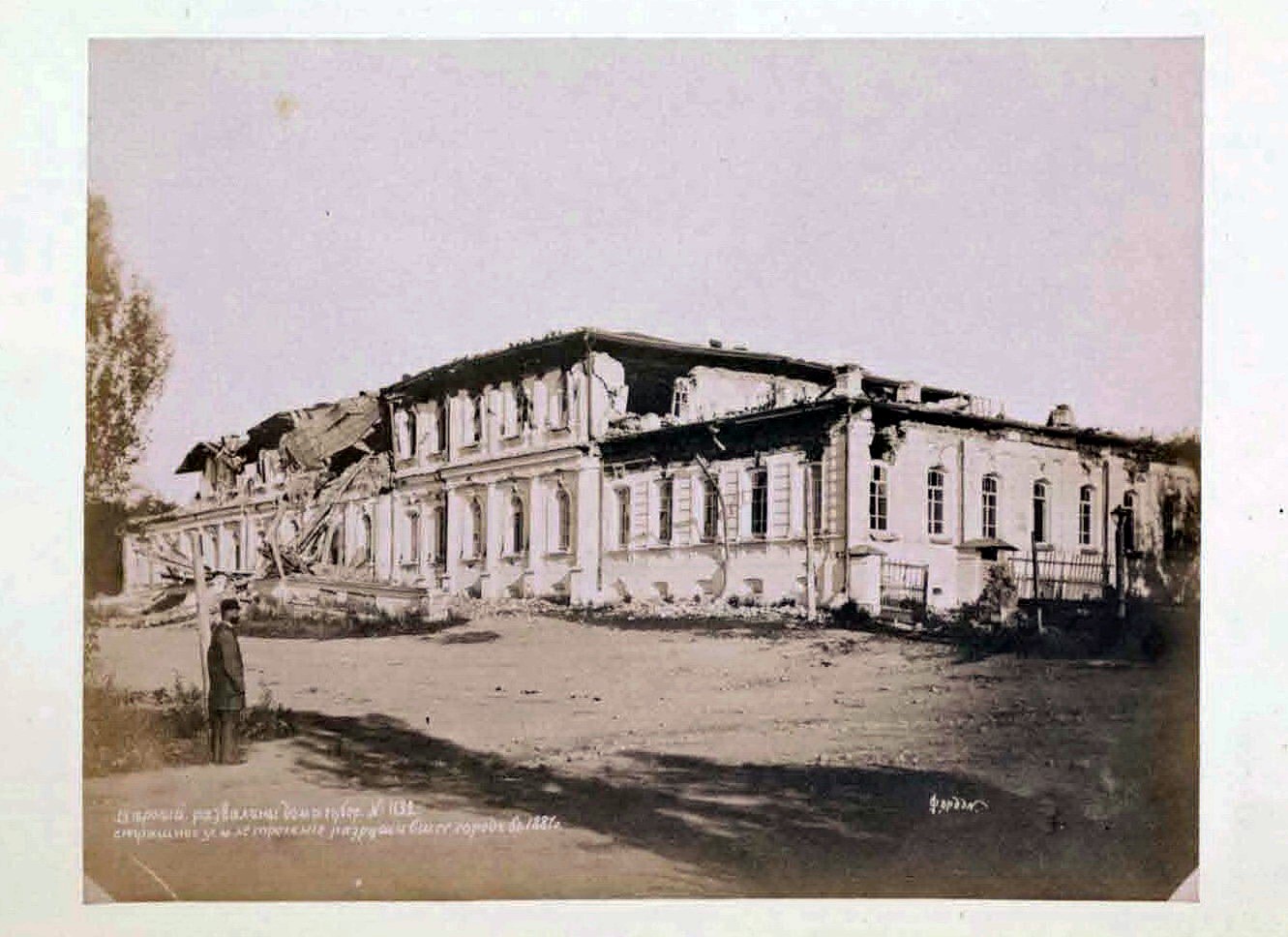
The modern city of Almaty (then called Verniy) was largely destroyed twice in its history:C2
1887 Verniy earthquake — estimated magnitude 7.3. Destroyed most of the city’s buildings and killed an estimated 300–400 people.
1911 Kebin (Chon-Kemin) earthquake — one of the largest 20th century earthquakes in Central Asia, estimated at magnitude 8.0–8.2. The epicentre was in the mountains south-east of the city. Landslides and ground ruptures extended hundreds of kilometres.
These events shaped the city’s subsequent development, including building codes, planning decisions, and the institutional emphasis on seismic preparedness.
What does the risk look like today?
Kazakhstan’s seismic zoning system classifies Almaty in the 9–10 MSK intensity zone — the highest category, corresponding to very strong to violent shaking.C1
This does not mean a major earthquake is imminent. It means:
- Active faults are present.
- Historical precedent shows major earthquakes occur in this region.
- When a major earthquake does occur, the expected ground motion would be severe.
Minor seismic events (magnitude 2–4) are detected regularly and are largely unfelt by the population. A significant event (magnitude 6+) has not struck the city centre directly since the early 20th century.
What about earthquake prediction?
Modern seismology cannot reliably predict when a major earthquake will occur.C4
What scientists can do:
- Map fault locations
- Estimate long-term probability of earthquakes above a given magnitude
- Issue early warnings after an earthquake has started (seconds, not days)
- Study historical records to understand recurrence intervals
What scientists cannot do:
- Forecast the date or month of a future major earthquake
- Guarantee safety based on a quiet period
The absence of a major earthquake in Almaty since 1911 does not reduce the underlying risk — it may mean stress has been accumulating on faults that have not yet ruptured.
What the capital move confirms
When Kazakhstan moved its capital from Almaty to a new northern city in 1997 (now Astana), earthquake risk was among the stated official reasons. Moving a national capital is a major political and logistical undertaking. The fact that seismic risk was placed on the list of justifications is itself evidence of how seriously the government treated the issue.C6
This context also matters when reading travel or tourism content that describes Almaty without mentioning seismic risk. The omission is common. It does not mean the risk is absent.
What is being done?
Kazakhstan’s Ministry of Emergency Situations maintains earthquake preparedness plans for Almaty, including evacuation routes, emergency response protocols, and public awareness programmes. The government has worked with international partners to improve seismic monitoring and assess building vulnerability.C5
A significant challenge is the existing building stock: many Soviet-era residential buildings in Almaty were not designed to modern seismic standards. The capacity of these structures during a major earthquake is a known concern for city planners.
What can be said accurately
- Almaty faces a well-documented, ongoing seismic risk from faults in the Tian Shan system.C1
- Historical earthquakes have caused major destruction in the region.C2
- The timing of the next significant earthquake cannot be predicted.C4
- Authorities take the risk seriously and maintain preparedness infrastructure.C5
- Living in Almaty does not require constant alarm — but dismissing the seismic risk is not justified by the evidence.
Accurate wording
Say “Almaty is in a well-documented high seismic hazard zone with a significant earthquake history”, not “Almaty doesn’t have any real earthquake risk” or “it’s as safe as any ordinary city.”
Where this claim appeared
- Travel advice forums — Questions about Almaty safety often focus on crime, traffic, and air quality; seismic risk is rarely mentioned in travel community discussions despite its significance
- Property investment guides — Several international real estate investment guides on Kazakhstan do not mention seismic risk as a factor in Almaty property valuation
- Reddit r/travel — Almaty trip planning threads virtually never include seismic risk in practical advice, despite its official status (reddit.com/r/travel)
- BBC and CNN travel features on Almaty — Modern travel profiles of Almaty rarely mention the seismic context, focusing on mountains, food, and nightlife instead
- Lonely Planet Kazakhstan — The Almaty section addresses outdoor activities near the mountains without noting the seismic hazard of the fault zones that created them (lonelyplanet.com/kazakhstan)
Reader context
Comments
Comments are moderated before publication. Keep them specific, sourced and respectful.
No published comments yet. Add the first useful context.