The answer in 20 seconds
Kazakhstan is a Muslim-majority country with a secular constitution. These two statements are compatible. The state does not define itself as an Islamic republic, while Islam remains an important part of family life, history, culture and public identity. Other religious communities are also present.C1
Secular does not mean anti-religious
In constitutional language, secularism means that the state is not governed by an official religion and that public authority is separated from religious institutions. It does not require citizens to be non-believers or prevent religious practice. A secular state can contain religious families, mosques, churches, synagogues and people who identify with no religion.C1
Islam and Kazakh identity
Islam has deep historical roots among Kazakh communities, but identity is not a single switch. People relate to religion through belief, family custom, holidays, morality, community and personal practice in different ways. Some are observant, some are culturally Muslim, some combine local custom with religious practice, and some are secular or unaffiliated.
A plural society
Kazakhstan also has Christian communities and smaller Jewish, Buddhist, Baháʼí and other religious groups. The country’s multi-ethnic history means religion, language and ethnicity do not map perfectly onto one another. A Russian-speaking citizen may be Muslim; a Kazakh citizen may be non-observant; a family may contain several religious backgrounds. These combinations are ordinary features of a diverse society.C2
Religion in public culture
Religious identity can appear through holidays, family ceremonies, food practices, clothing, charity and ideas about hospitality without becoming a demand for a religious government. Nauryz, for example, has pre-Islamic, Islamic and modern civic layers in the way people describe and celebrate it. A public cultural symbol does not automatically show that the state has adopted a religious law.
Why the two stereotypes coexist
Outside observers sometimes look at a mosque, a Muslim name or a religious holiday and infer an Islamic state. Others look at Soviet history, urban life or secular law and infer that religion is irrelevant. Both readings mistake one visible layer for the whole society. The better question is how belief, law, institutions and personal practice interact in different settings. That approach is more accurate than importing assumptions from another country.
The legal qualification
Freedom of belief exists within a regulated legal environment. International monitors have raised concerns about registration requirements, missionary activity and restrictions affecting some religious groups. That means “secular” should not be used as a synonym for “religious freedom is unlimited.” Constitutional principle and lived enforcement must be examined separately.C3
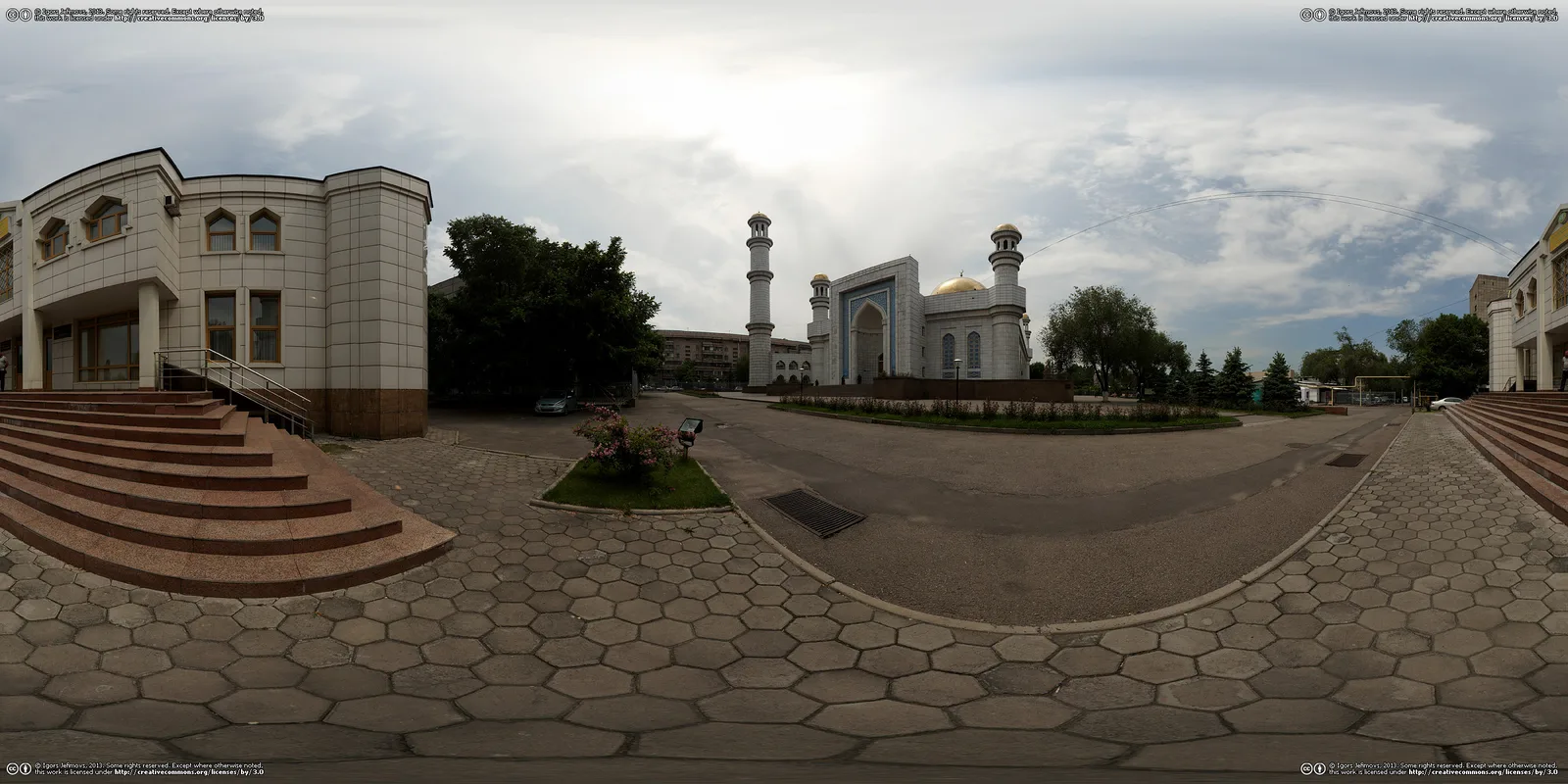
Religious life and secular law coexist in contemporary Kazakhstan.
Better wording
Say “Kazakhstan is a secular state with a Muslim-majority population and religious diversity”, not “Kazakhstan is an Islamic state” or “religion has no role there.”
Where this claim appeared
- The Washington Post (2019) — A piece on Central Asian politics described Kazakhstan’s secularism as evidence of “low religiosity,” conflating constitutional arrangements with personal practice (washingtonpost.com)
- Reddit r/islam — Questions about Muslim life in Kazakhstan produce widely varying answers; several top responses deny that any meaningful Muslim practice exists there (reddit.com/r/islam)
- Travel forums (TripAdvisor, Lonely Planet) — Multiple posts ask whether visitors need to observe any cultural norms related to Islam; top answers often dismiss religious practice as irrelevant without noting regional and generational variation
- BBC documentary on Central Asia (2022) — A narration described Kazakhstan’s secularism as “a legacy of Soviet atheism” without distinguishing constitutional law from current religious demographics (bbc.co.uk)
Reader context
Comments
Comments are moderated before publication. Keep them specific, sourced and respectful.
No published comments yet. Add the first useful context.