The answer in 20 seconds
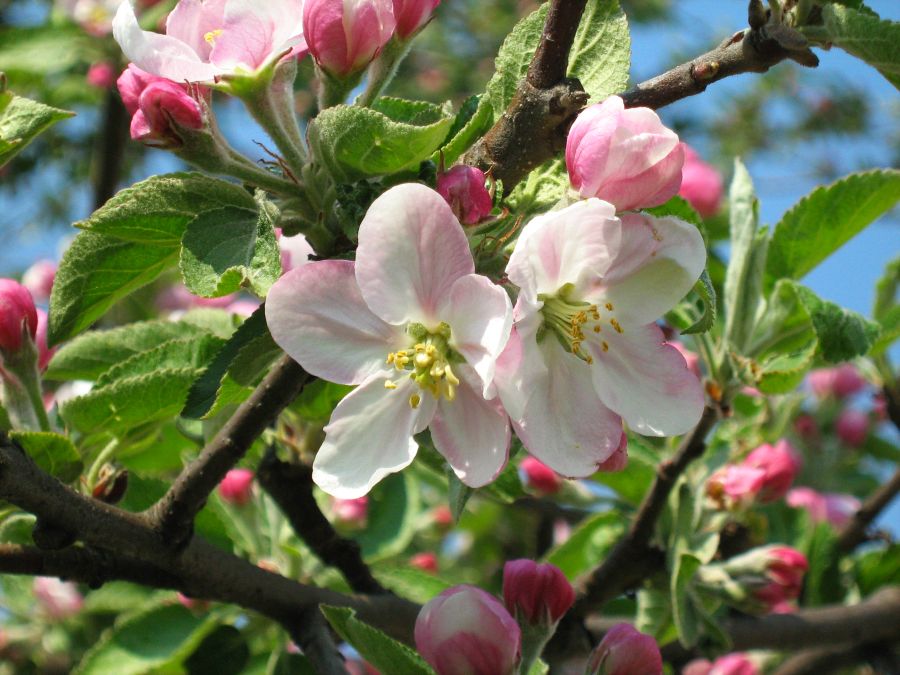
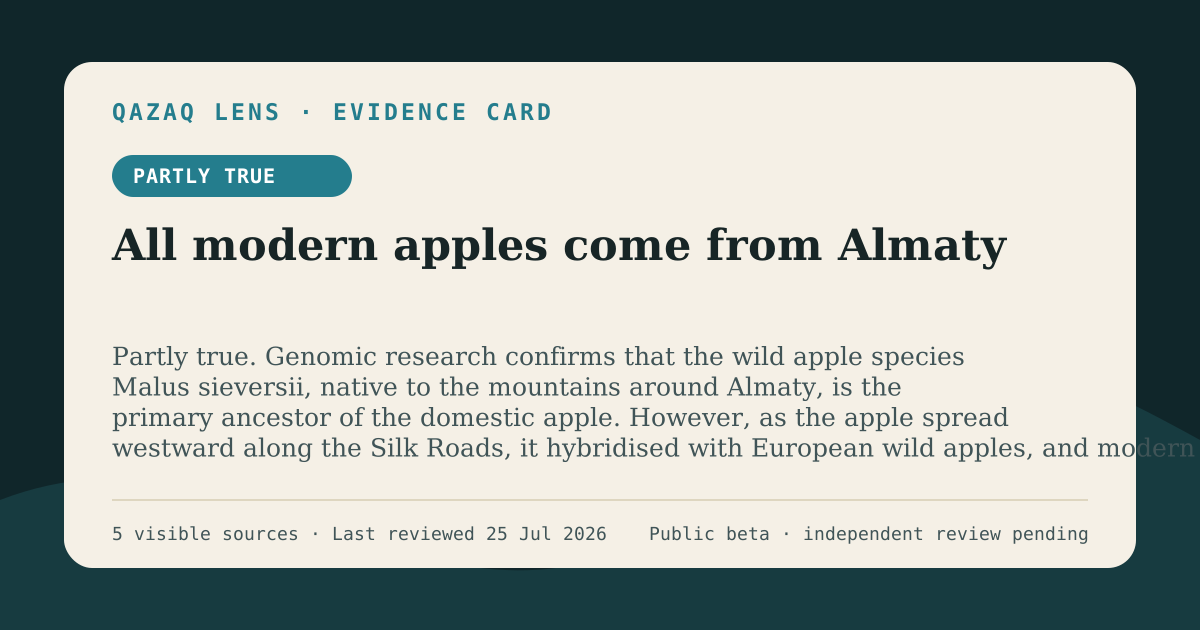
Kazakhstan has a genuinely strong connection to the origin of the domestic apple. The wild apple species Malus sieversii, native to the mountains near Almaty, is the primary ancestor of Malus domestica — the apple you eat today.C1
But the full story is more complex. As cultivated apples spread westward along ancient trade routes, they hybridised with European wild apples, adding a second genetic lineage. Modern apple cultivars carry contributions from both.C2
“All apples come from Almaty” is directionally accurate but oversimplified.C3
What is Malus sieversii?
Malus sieversii is a wild apple species found in the Tian Shan and Dzungarian Alatau mountain ranges of south-east Kazakhstan (and adjacent parts of China, Kyrgyzstan, and Tajikistan). The forests of wild apple trees around what is now Almaty have been noted by travellers since at least the 18th century.
The botanist Johann Sievers, who collected specimens in the region in the 1790s, gave the species its scientific name. Soviet botanist Nikolai Vavilov, who studied centres of crop origin in the 1920s–1930s, identified the region as a likely origin point for apple domestication — a hypothesis later confirmed by genetic analysis.C1
What does the genomic evidence say?
A landmark study published in Nature Communications in 2017 used whole-genome sequencing of hundreds of apple accessions to trace the evolutionary history of Malus domestica. The results confirmed that Malus sieversii is the primary contributor to the domestic apple’s genome — accounting for the majority of its ancestry.C1
The same research identified a second important contributor: Malus sylvestris, the European crab apple. As cultivated apples spread westward from Central Asia — likely along the Silk Road trade routes — they interbred with wild European crab apples. This hybridisation contributed traits to modern cultivars, particularly to the apple’s size.C2
The study supports what researchers call a two-stage model:
- Initial domestication from Malus sieversii in Central Asia.
- Hybridisation with Malus sylvestris as the apple spread westward.
What does “all apples come from Kazakhstan” get right and wrong?
What it gets right:
- Malus sieversii is the dominant genetic ancestor of the domestic apple.
- The region around Almaty is the most likely geographic centre of apple domestication.
- Kazakhstan’s Tian Shan forests contain wild genetic diversity that remains relevant to apple breeding today.
What it oversimplifies:C3
- Modern cultivars are not pure descendants of Malus sieversii; the European wild apple made a real genetic contribution.
- Domestication was a process, not an event at a single location.
- Wild Malus sieversii populations also exist in adjacent parts of China, Kyrgyzstan, and Tajikistan — not exclusively in Kazakhstan.
Why does this matter for Almaty?
The name Almaty is widely stated to derive from alma (алма), the Kazakh word for apple. If correct, the city is literally named for the fruit whose wild ancestor grows in its surrounding mountains.C5
The wild apple forests of the Tian Shan, once extensive around Almaty, have significantly declined in area due to urban expansion, overgrazing, and fungal diseases. FAO and Bioversity International have documented the forests as a globally significant genetic reservoir and noted conservation concerns.C4
Where this claim appeared
- Scientific American (2018) — Covered the Malus sieversii research with the headline “Your Apple Came from Kazakhstan”; the simplified headline spread widely as the complete story (scientificamerican.com)
- BBC Future (2020) — An article on the origin of common foods stated that “apples originated in Kazakhstan” without noting the European wild apple contribution (bbc.com/future)
- Reddit r/todayilearned — “TIL all apples originated in Kazakhstan” regularly reaches the front page; comments rarely note the Malus sylvestris hybridisation (reddit.com/r/todayilearned)
- Kazakhstan Tourism materials — Official tourism promotion uses the apple-origin story as a flagship fact about Almaty; the claim is accurate in essence but often presented without the full two-lineage picture (kazakhstan.travel)
- NPR (2011, widely recirculated) — “In Search of the Wild Kazakh Apple” was an early widely-read piece that shaped the “Kazakhstan = birthplace of the apple” narrative (npr.org)
Reader context
Comments
Comments are moderated before publication. Keep them specific, sourced and respectful.
No published comments yet. Add the first useful context.