The answer in 20 seconds
The yurt is a major part of Kazakh cultural heritage, but it is not the everyday home of most people in Kazakhstan. Official national and World Bank data show that the majority of the population lives in urban areas.C2
What is a yurt?
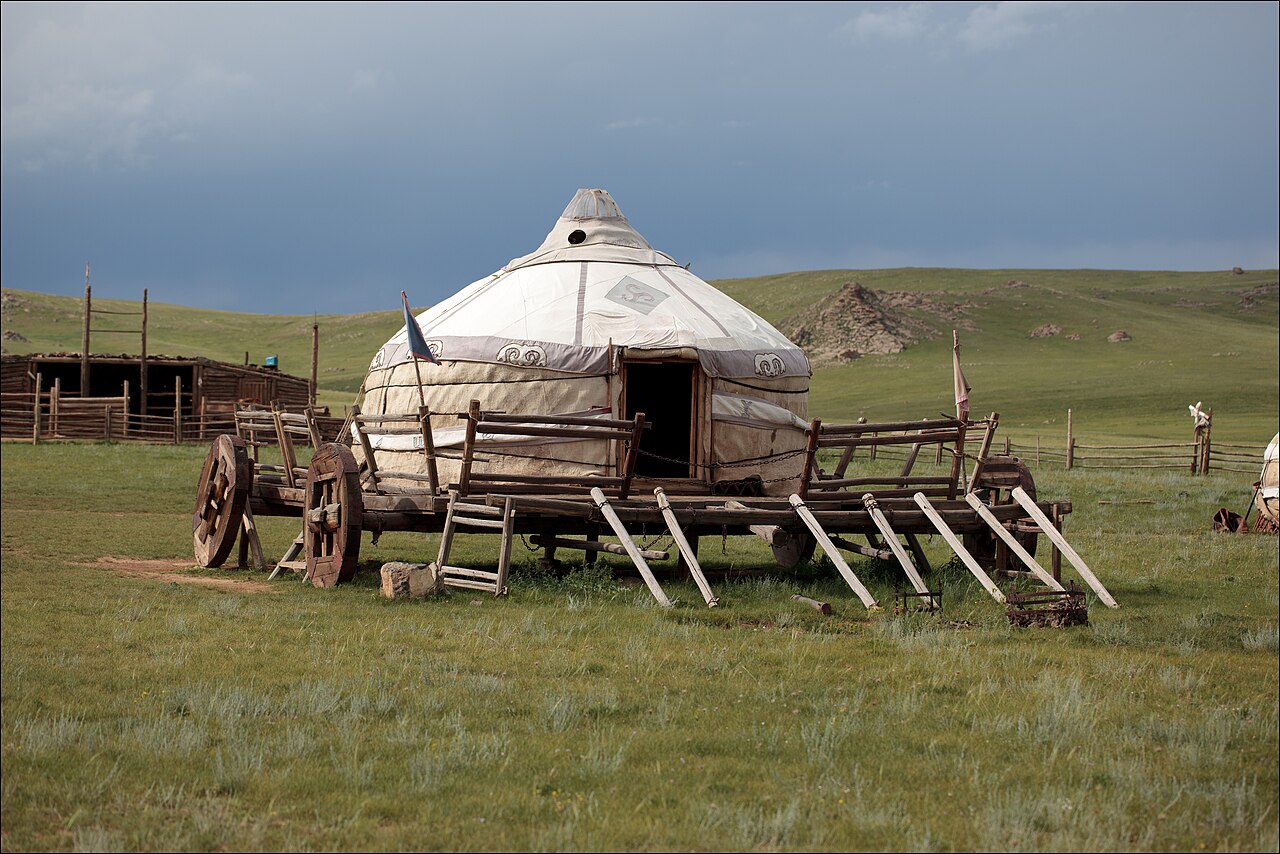
A yurt — in Kazakh: киіз үй (kiiz üy), literally “felt house” — is a portable, circular dwelling with a wooden lattice frame covered in felt and fabric. It can be assembled and disassembled in a matter of hours, which made it well suited to the seasonal migration patterns of nomadic and semi-nomadic pastoral life on the steppe.
The structure has a central opening at the top (the shanyrak) that allows light in and smoke out. The shanyrak is a significant symbol in Kazakh culture — it appears on the national emblem of Kazakhstan.
Why is the yurt culturally important?
UNESCO recognizes the knowledge and skills involved in making Kazakh (and Kyrgyz and Karakalpak) yurts as intangible cultural heritage of humanity. The inscription acknowledges the craft knowledge, materials, symbolic decorations and community traditions tied to the form.C1
Yurts appear at major celebrations including Nauryz (the spring new year), weddings and national festivals. Government buildings, airports and public spaces sometimes feature yurt-inspired architecture. The form carries real cultural weight — it is not a historical curiosity.
When are yurts actually used?
Yurts are used today in several contexts:
- Pastoral settings — families and communities involved in transhumance (seasonal movement with livestock) in mountain and steppe regions may use yurts during summer pastures.
- Celebrations and ceremonies — wedding receptions, Nauryz celebrations and other gatherings frequently include yurts as a traditional space.
- Tourism — yurt camps operate in scenic areas including the Altai region, Charyn Canyon surroundings and near mountain lakes.
- Cultural events — festivals, museums and cultural centres set up yurts for visitors.
These are genuine uses. None of them describe the housing situation of most Kazakhstanis.
What does everyday housing look like?
Kazakhstan has large cities, apartment districts, Soviet-era housing blocks, modern residential towers, suburban areas and rural villages with conventional permanent homes. Kazakhstan’s population is predominantly urban — a majority of residents live in cities rather than in rural or nomadic settings.C2
Almaty has a skyline of high-rise apartment and commercial buildings. Astana’s residential areas are largely modern multi-storey construction. Even in regional cities and many villages, the standard housing is permanent construction.
Why the confusion persists
The image of Central Asian peoples living in yurts circulates in travel photography, film and cultural reference in ways that do not distinguish between ceremonial or seasonal use and everyday housing. An object that is culturally important gets treated as if it describes a way of life that most people currently live.C3
A better sentence
“The yurt is an important part of Kazakh heritage, while most Kazakhstanis live in permanent modern housing.”
Where this claim appeared
- Tourism Kazakhstan official materials (pre-2018) — Official tourism brochures featured yurts in nearly every image, including urban context imagery, creating an expectation of yurt-based living (kazakhstan.travel)
- National Geographic Kazakhstan photo essays — Multiple published essays used yurt imagery as the primary visual representation of Kazakhstani life; apartment buildings were absent from hero images
- Reddit r/travel — “What to expect in Kazakhstan?” threads consistently surface yurt references as the defining accommodation type, with few corrections (reddit.com/r/travel)
- BBC Travel (2020) — A “what it’s like to live in Kazakhstan” feature used a yurt photograph as the lead image despite the article describing urban life (bbc.com/travel)
- YouTube travel vlogs — The most-viewed Kazakhstan travel videos (3M+ views) open with yurt footage, establishing viewer expectation before showing city footage; comments frequently express surprise at seeing Almaty’s skyline (youtube.com)
Reader context
Comments
Comments are moderated before publication. Keep them specific, sourced and respectful.
No published comments yet. Add the first useful context.