The answer in 20 seconds
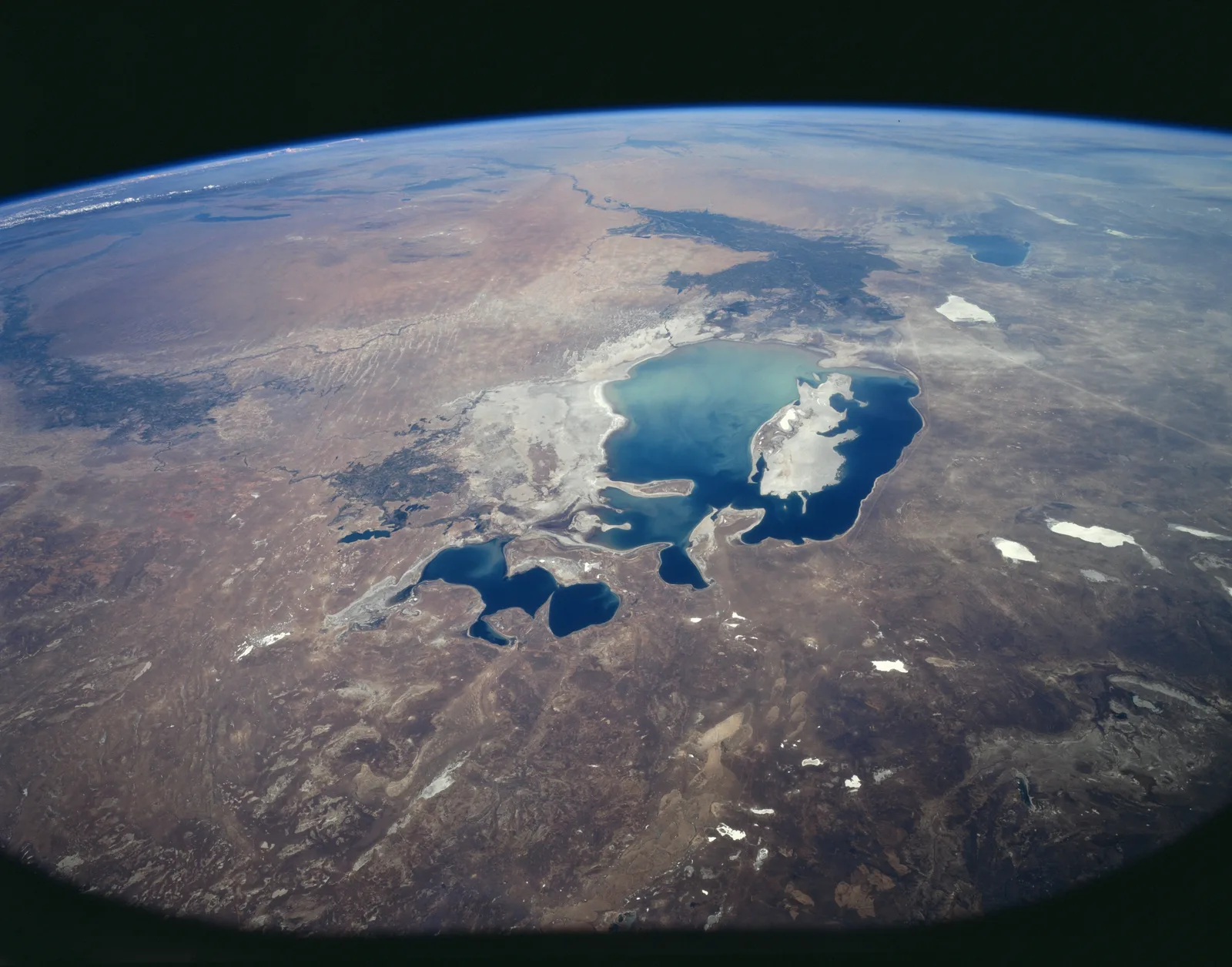
The Aral Sea did not vanish as one uniform body, and it has not been fully restored. Soviet irrigation decisions caused a catastrophic decline. Kazakhstan’s Northern Aral Sea has benefited from projects that retain water and support restoration, while other parts of the basin remain severely degraded.C2
Why the disaster happened
The Aral Sea depended on river flows from the Amu Darya and Syr Darya. Large-scale irrigation diverted water for agriculture, especially during the Soviet period. As inflow fell, the lake contracted, became saltier and divided into separate bodies. Fishing economies collapsed, exposed seabed created dust and salt problems, and communities experienced long-term social and health consequences.
What changed in the north
The Kok-Aral Dam, completed in 2005 with World Bank support and Kazakhstani participation, separated the Northern Aral Sea from the southern sections and helped retain Syr Darya water. This was not a miracle and did not refill the historic sea. It was a targeted intervention that improved the northern section and showed that water engineering can produce local gains even when basin-wide recovery is impossible on the same scale.C1
Recovery is not reversal
Current work includes planting saxaul and other vegetation on parts of the exposed seabed, supporting local ecosystems and reducing dust movement. UNDP describes these efforts as community and ecosystem restoration, not as a claim that the old shoreline has returned. The difference matters: restoration can protect people and habitats without erasing the scale of the original damage.C2
A transboundary problem
The Aral basin crosses national borders and depends on decisions about farming, reservoirs, energy and river allocation across Central Asia. Kazakhstan can improve the Northern Aral, but it cannot unilaterally restore every part of a shared basin. Water savings upstream, regional coordination and local livelihoods all affect what is possible. This is why the story belongs to environmental policy and community life, not only to dramatic travel photography.
What recovery should mean
Recovery can mean safer water, returning fish habitat, less dust, restored vegetation, functioning communities and better health outcomes. It does not have to mean recreating the 1960 shoreline exactly. Setting a narrower goal makes progress measurable and avoids turning partial success into either triumphalism or fatalism. The sea’s future remains uncertain, but it is not a binary story of “gone” versus “back.”
Why the simple meme persists
The “Aral Sea is gone” image is visually powerful because abandoned ships and empty water are easy to understand. The opposite slogan, “Kazakhstan brought the sea back,” is also too simple. Both compress a divided, transboundary water system into one dramatic before-and-after. The responsible version distinguishes the North Aral, the South Aral, the wider basin and the communities living with different outcomes.C3
Better wording
Say “The Aral Sea suffered a catastrophic decline, while Kazakhstan’s northern section has seen partial recovery”, not “the sea is completely gone” or “the crisis is solved.”
Reader context
Comments
Comments are moderated before publication. Keep them specific, sourced and respectful.
No published comments yet. Add the first useful context.