The answer in 20 seconds
Kazakhstan’s Botai culture (around 3500 BCE) provides some of the earliest evidence of humans managing and possibly riding horses, along with evidence of milking.C1
But ancient DNA analysis published in Nature in 2021 showed that modern domestic horses do not descend from Botai horses. They trace to a separate population from the western Eurasian steppes — roughly modern Ukraine and southern Russia — dated to around 2200–2000 BCE.C3
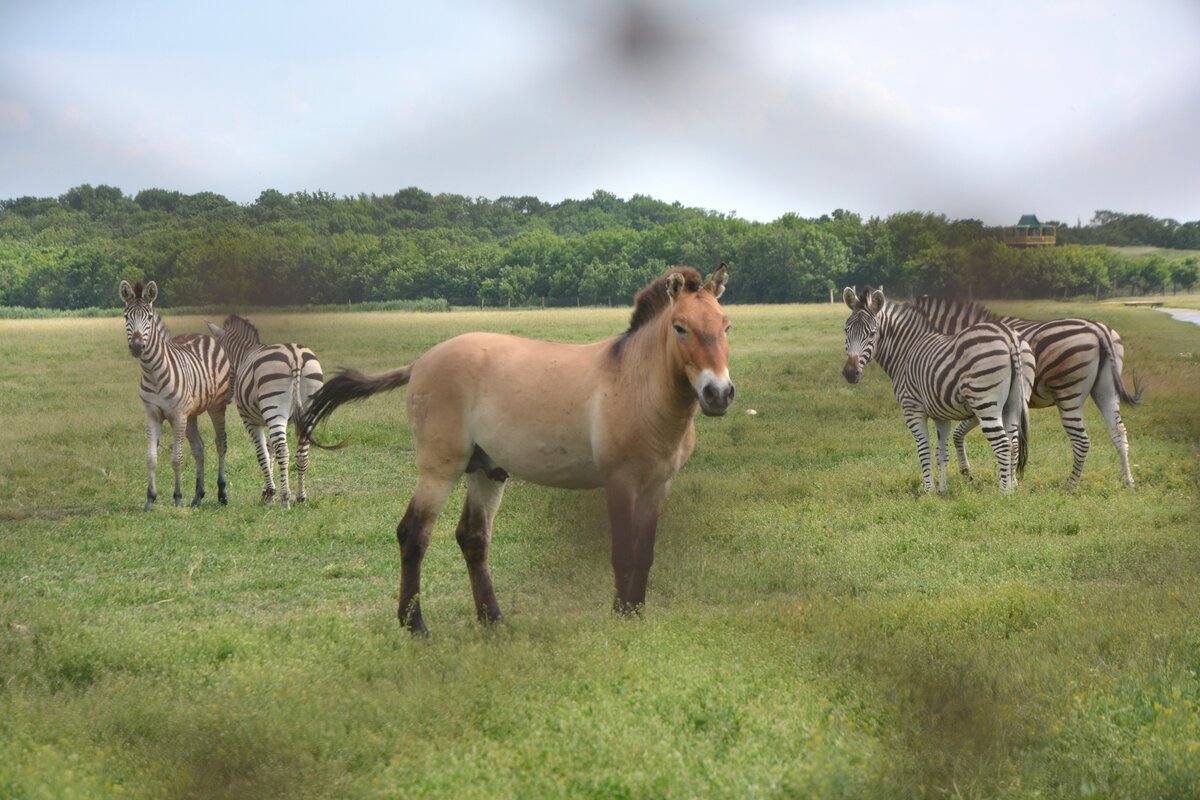
The Botai contribution to modern horses appears to have mostly died out. Botai horses survive today as Przewalski’s horses — not as the horses we ride.C4
The claim “Kazakhstan domesticated the first horse” is historically significant but scientifically contested.
What happened at Botai?
The Botai culture inhabited the northern Kazakh steppe roughly 5,000–6,000 years ago. Excavations at Botai and nearby sites have produced unusual evidence of intensive human–horse interaction:C1
- Bit wear: Horse teeth showing wear patterns consistent with a bit or rope bridle, suggesting riding
- Milk residues: Lipid analysis of pottery from the sites found residues consistent with mare’s milk — implying the horses were milked regularly
- Enclosures: Post-hole patterns suggesting corrals or enclosures large enough to contain horse herds
- Horse bones: Horse remains make up the vast majority of animal bones at Botai sites, far more than at typical hunter-gatherer camps
The 2009 Nature paper by Outram and colleagues argued these combined lines of evidence pointed to genuine horse domestication at Botai — the earliest known example.C2
What did the ancient DNA change?
In 2018 and more definitively in 2021, large-scale ancient DNA studies analysed horse remains from dozens of sites across Eurasia spanning thousands of years.C3
The results were striking: Botai horses are not the primary ancestors of modern domestic horses. Modern horses — from the Thoroughbred to the Mongolian horse to the Icelandic pony — trace their lineage to a different population: horses from the Pontic-Caspian steppe (what is now Ukraine, southern Russia, and the northern Caucasus), which expanded explosively around 2200–2000 BCE.
What happened to the Botai horses? The evidence suggests that the Botai horse lineage survived as Przewalski’s horses — the stocky, sandy-coloured horses of Central Asia long called “the last truly wild horse.”C4 Genetically, Przewalski’s horses are not ancestral to domestic horses; they are descended from a domesticated (or managed) Botai population that returned to a feral state after domestication collapsed or was abandoned.
What does this mean for the Botai claim?
The Botai evidence remains genuine and important. It shows that people in what is now Kazakhstan were managing horses — and likely milking them — around 3500 BCE, among the earliest such evidence from any known site.C2
But the claim that this was the domestication event that produced the horses used throughout history appears to be wrong. The lineage of modern domestic horses traces to a different population, probably in the western steppes.C6
There are several possible interpretations:C5
- Botai was an independent domestication that failed — horses were managed at Botai but the lineage did not spread to become the global domestic horse.
- Multiple domestications occurred — horses may have been independently tamed in several steppe regions; Botai is one documented case, the western steppe is another.
- Botai was intensive management, not full domestication — some researchers argue the bit wear and milk residues could be consistent with managing semi-tamed horses without the full genetic selection process of domestication.
The third interpretation remains controversial. Most researchers still regard Botai as genuine early horse management, even if the lineage did not survive into modern horses.
The current scientific picture
The leading hypothesis, based on the 2021 Nature study, is that modern domestic horses originate from the Pontic-Caspian steppe — modern Ukraine and southern Russia — and began their expansion approximately 4,200 years ago. This population spread rapidly across Eurasia, largely replacing earlier horse populations including the Botai lineage.C6
This hypothesis may itself change as more ancient DNA is analysed from additional sites across Central Asia, the Middle East, and North Africa. Horse domestication research has moved rapidly since 2018, and the consensus in 2021 may look different by 2030.
Where this claim appeared
- Scientific American (2009) — “Earliest Horse Riding Found in Kazakhstan” was widely syndicated after the Outram et al. paper; the nuance about lineages was not yet available (scientificamerican.com)
- The Guardian (2009) — “How humans first domesticated the horse” cited Botai as the definitive answer; the 2021 revision was covered separately and less widely (theguardian.com)
- Reddit r/history — “Kazakhstan domesticated the first horse” appears as a frequent trivia claim in history threads; most do not mention the 2021 DNA update (reddit.com/r/history)
- Kazakhstan Tourism — Horse domestication at Botai is cited in tourism narratives as a founding achievement; the contested nature of the claim is not noted (kazakhstan.travel)
- Wikipedia “Horse domestication” — The article has been extensively updated post-2021 and now represents the contested picture more accurately; older cached versions still cite Botai as definitive (wikipedia.org)
Reader context
Comments
Comments are moderated before publication. Keep them specific, sourced and respectful.
No published comments yet. Add the first useful context.