The answer in 20 seconds
Kazakhstan is not a nuclear-armed state. It inherited the world’s fourth-largest nuclear arsenal when the Soviet Union collapsed in 1991, and then voluntarily gave up every weapon — the only country in history to have done so at that scale.C2
The inheritance
When the Soviet Union dissolved in December 1991, its nuclear weapons did not disappear. They were distributed across the territory of four newly independent states: Russia, Ukraine, Belarus and Kazakhstan. Kazakhstan’s inheritance was approximately 1,400 strategic nuclear warheads along with delivery infrastructure — placing it, at the moment of independence, ahead of the United Kingdom, France and China in nuclear arsenal size.C1
Kazakhstan had not chosen to develop these weapons and had no operational control over them — the warheads remained under Russian command authority. But their physical presence on Kazakhstani territory made the country a nuclear issue of the first order for international security.
Four ideas that must not be collapsed
These are related but different facts:
- Soviet weapons were stationed in Kazakhstan. That describes the inheritance of 1991, not a current Kazakh nuclear arsenal.
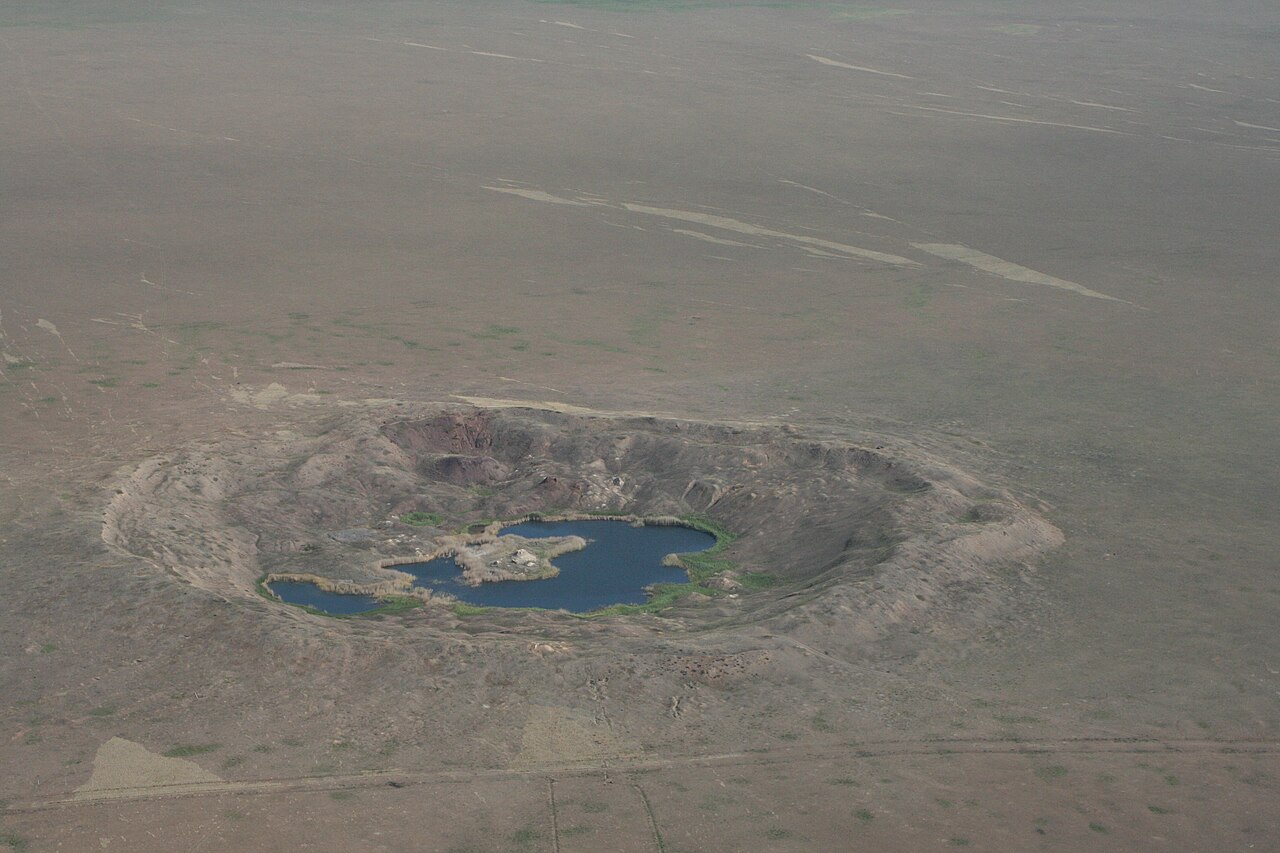
- The Semipalatinsk Test Site was in Kazakhstan. It was used for Soviet testing from 1949 to 1989, leaving a major public-health and environmental legacy.
- Kazakhstan produces uranium. Uranium mining is part of the civilian fuel cycle; it is not the same as possessing nuclear warheads.
- Kazakhstan has no nuclear weapons of its own. It transferred or dismantled the inherited arsenal and joined the NPT as a non-nuclear-weapon state.
The same distinction applies to nuclear energy. A country can mine uranium, discuss or develop civilian nuclear power, host a former weapons test site and still not be a nuclear-armed state. Conflating these categories creates a false picture in both directions.
The decision to disarm
Kazakhstan’s first president, Nursultan Nazarbayev, had been a consistent advocate for nuclear disarmament — partly shaped by the country’s own experience with nuclear testing (see below). The government decided to transfer all nuclear weapons to Russia and accede to the Nuclear Non-Proliferation Treaty as a non-nuclear weapons state.
Disarmament chronology
- 1949 First Soviet nuclear test detonated at Semipalatinsk, August. The Soviet nuclear test programme begins on Kazakhstani soil.
- 1989 Final nuclear test at Semipalatinsk. Nazarbayev, then First Secretary of the Kazakh SSR, publicly calls for the site’s closure.
- 1991 Kazakhstan declares independence (December). Semipalatinsk Test Site officially closed. Approximately 1,400 warheads remain on Kazakhstani territory under Russian command authority.
- 1992 Lisbon Protocol signed. Kazakhstan, Ukraine, and Belarus commit to transferring nuclear weapons to Russia under START treaty obligations.
- 1994 Kazakhstan accedes to the Nuclear Non-Proliferation Treaty as a non-nuclear weapons state. Budapest Memorandum signed — US, UK, and Russia provide security assurances.
- 1995 Last nuclear warhead leaves Kazakhstani territory. Disarmament complete. Kazakhstan becomes the only country to have voluntarily relinquished a nuclear arsenal of this scale.
Under the Lisbon Protocol to the START treaty (1992), Kazakhstan, Ukraine and Belarus agreed to transfer their nuclear weapons to Russia. Kazakhstan completed the transfer process and joined the NPT in 1994, with the last nuclear warheads leaving Kazakhstani territory in 1995.C2
This was not an automatic or pressured handover — it involved active negotiations, security guarantees from the United States, Russia and the United Kingdom (the Budapest Memorandum, to which Kazakhstan was a signatory alongside Ukraine and Belarus), and deliberate political choices by the Kazakhstani government.
The Semipalatinsk Test Site
Before Kazakhstan inherited any weapons, the region already bore the consequences of Soviet nuclear policy. The Semipalatinsk Test Site — known internationally as “The Polygon” — is located in north-east Kazakhstan, in the steppe region around what is now the city of Semey (formerly Semipalatinsk).
Between 1949 and 1989, the Soviet Union conducted 456 nuclear tests at Semipalatinsk — both atmospheric and underground. The first Soviet nuclear bomb was detonated there in August 1949, less than a month after the United States had conducted its most recent test.C3
The site was chosen for its remoteness from Moscow and major Russian cities. It was not remote from Kazakhstani communities. Dozens of settlements were in the fallout radius of atmospheric tests, and the affected area and population were not adequately informed or evacuated during the testing period.
Health consequences
Research published in peer-reviewed medical literature documents significantly elevated rates of cancer, thyroid disease, cardiovascular disease, immune disorders and reproductive health problems in populations in the Semipalatinsk region. An estimated 1.5 million people were exposed to ionising radiation from the tests.C4
The effects are intergenerational — epidemiological studies have found elevated rates of certain conditions in the children and grandchildren of directly exposed populations. The Semipalatinsk region remains a subject of ongoing public health research.
The evidence should be read carefully rather than turned into a single dramatic statistic. Exposure varied by test, settlement, age, diet, wind direction and distance from the polygon. Researchers therefore use cohort studies, dose reconstruction, medical records and comparison groups, and they continue to debate the limits of historical data. The uncertainty around an exact individual dose does not erase the well-established fact of long-term exposure and public-health harm.
Kazakhstan closed the Semipalatinsk Test Site in 1991 — one of Nazarbayev’s first acts as head of state of independent Kazakhstan. The Comprehensive Nuclear-Test-Ban Treaty Organization has worked with Kazakhstan on monitoring and remediation at the site.
The international dimension
Kazakhstan’s voluntary denuclearisation is frequently cited in international arms control discussions as a model — a country that had the weapons, chose not to keep them, and has since been a consistent advocate for nuclear disarmament in international forums. Kazakhstan has participated in the Astana process and various multilateral non-proliferation initiatives.
The Budapest Memorandum, which provided security assurances to Kazakhstan, Ukraine and Belarus in exchange for their nuclear weapons, has attracted renewed international attention following Russia’s 2022 invasion of Ukraine. Kazakhstan has not publicly characterised the memorandum in the same terms as Ukraine’s government, but the topic is a live one in Kazakhstani foreign policy discussions.
Accurate phrasing
- Current status: Kazakhstan is a non-nuclear weapons state and an NPT member.
- Historical fact: Kazakhstan inherited a nuclear arsenal in 1991 and voluntarily gave it up by 1995.
- Testing legacy: The Semipalatinsk Test Site operated under Soviet authority and affected Kazakhstani populations — this is not the same as Kazakhstan being a nuclear power.
Reader context
Comments
Comments are moderated before publication. Keep them specific, sourced and respectful.
No published comments yet. Add the first useful context.