The answer in 20 seconds
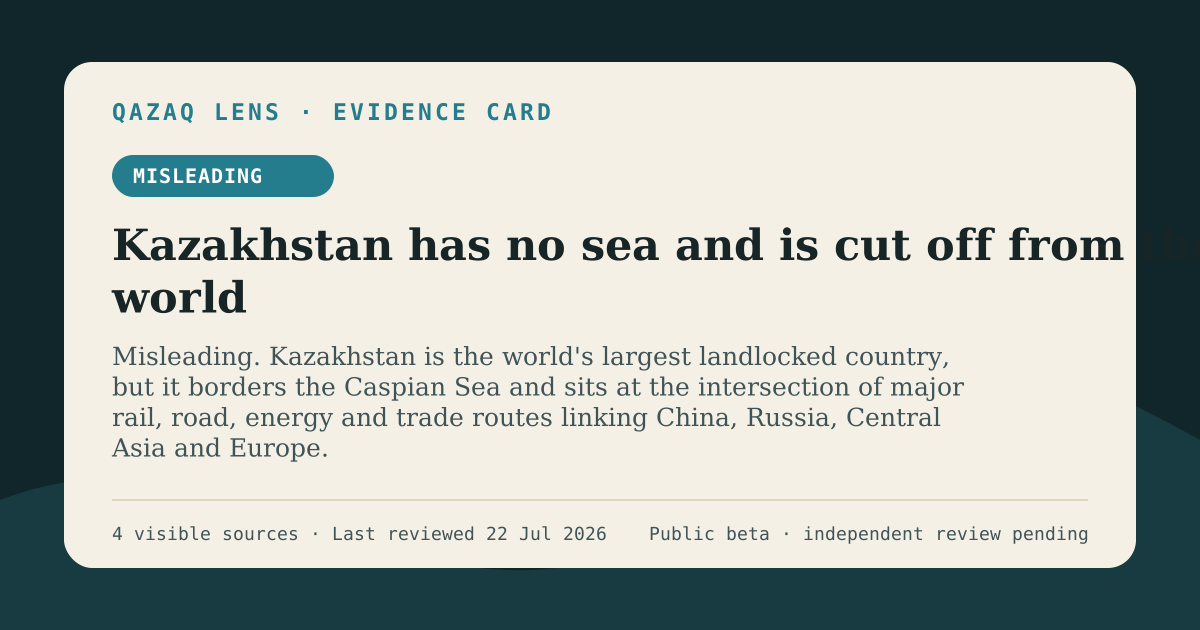
Kazakhstan is landlocked, but “landlocked” does not mean “without maritime geography” or “cut off.” The country borders the Caspian Sea, shares borders with major powers and sits on routes connecting China, Central Asia, Russia and Europe. Its geography creates real transport costs, but also gives it strategic importance.C1
What landlocked actually means
In international geography, a landlocked state lacks a coastline on an open ocean. Kazakhstan still has a long Caspian coastline, but the Caspian is an enclosed inland sea rather than a direct ocean outlet. Ships and cargo still depend on ports, rail links and onward connections through other states. The technical distinction is important because it explains both the limitation and the opportunity.
A crossroads with friction
Kazakhstan’s location between China, Russia, Uzbekistan, the Caspian and the wider Caucasus makes it a transit space. But transit is not automatic. Borders, customs, gauge changes, port capacity, weather, geopolitics and financing all affect how quickly and cheaply goods move. Calling the country isolated hides the infrastructure and diplomacy required to make connectivity work.
The Middle Corridor
The Trans-Caspian International Transport Route, commonly called the Middle Corridor, links rail and road segments in China and Central Asia with Caspian shipping and routes through the South Caucasus toward Europe. Kazakhstan is one component of this network, not its only gatekeeper. New investment can improve resilience, but it does not erase dependence on partners and multimodal transfers.C2
Ports without an ocean
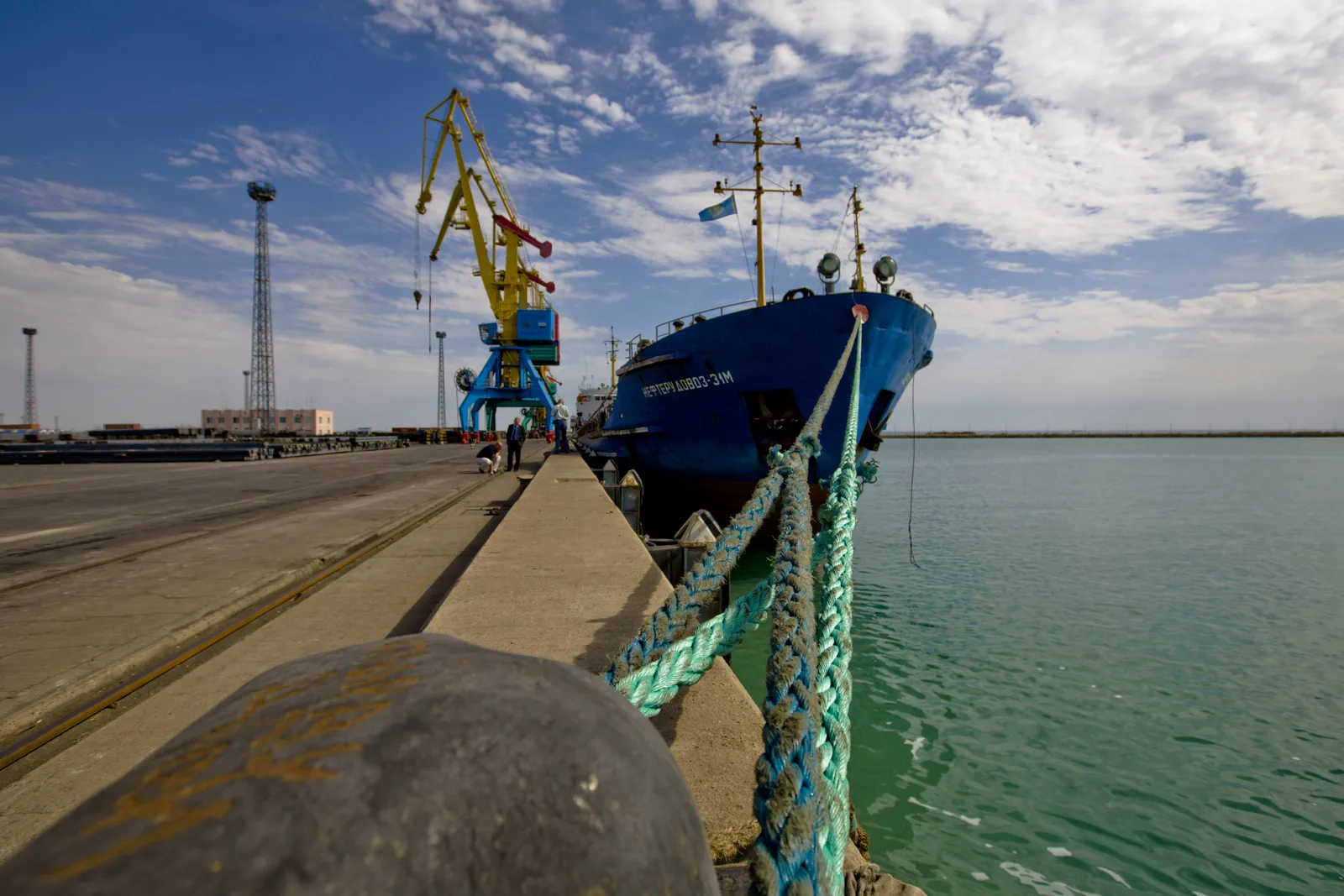
Aktau and Kuryk on the Caspian are not ocean ports, but they are important transport nodes. Cargo arriving there must cross the Caspian and continue through other countries, which adds transfers and coordination. That limitation is precisely why rail, ferry capacity, customs systems and reliable schedules matter. “Landlocked” describes the legal-geographic position; it does not describe whether a country has access to shipping, ports or international commerce.
Connection has costs
Being connected does not mean being equally connected everywhere. Remote regions may face long distances to railheads, roads or markets, and the country remains vulnerable to disruptions in neighbouring transit systems. A strong explanation holds both facts together: Kazakhstan is a major corridor space and a country where geography makes logistics expensive.
Why the stereotype survives
Maps that show no ocean port can make Kazakhstan look like a blank interior. Historical stereotypes also treat Central Asia as a remote endpoint instead of a region that has long connected empires, markets and communities. The modern correction is not to claim that distance is irrelevant. It is to recognise that distance is being managed through infrastructure, trade agreements and regional cooperation.C3
Better wording
Say “Kazakhstan is landlocked but strategically connected through the Caspian and overland corridors”, not “Kazakhstan is isolated from the world.”
Where this claim appeared
- Geography textbooks (widely used) — Standard definitions of “landlocked country” often cite Kazakhstan as an example of geographic isolation from global trade, without noting its rail and pipeline connectivity
- Reddit r/geopolitics — “How does Kazakhstan trade if it’s landlocked?” produces threads treating the country as inherently disconnected from global markets (reddit.com/r/geopolitics)
- The Economist “Middle Corridor” reporting — Several pieces noted that outsiders regularly assume Central Asia is unreachable by freight before explaining the actual rail routes (economist.com)
- Bloomberg (2022) — Coverage of supply chain rerouting away from Russia noted widespread surprise that Kazakhstan already had established freight corridors to China and Europe (bloomberg.com)
- YouTube travel vlogs — Multiple creators described “arriving in one of the world’s most isolated countries” before filming Almaty’s urban infrastructure; the framing contradicts the footage (youtube.com)
Reader context
Comments
Comments are moderated before publication. Keep them specific, sourced and respectful.
No published comments yet. Add the first useful context.