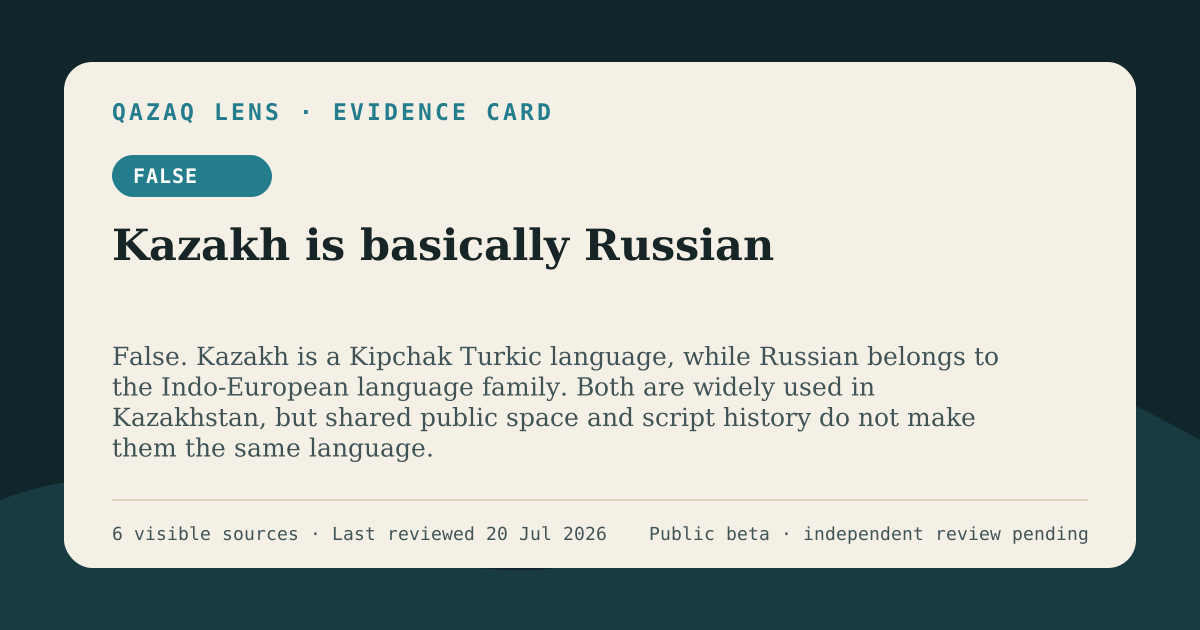
The answer in 20 seconds
Kazakh and Russian are not dialects of one language. Kazakh is a Kipchak Turkic language; Russian belongs to the Indo-European family.C1
How different are they?
The distance between Kazakh and Russian is roughly comparable to the distance between Finnish and French — both are spoken in Europe, but they are unrelated. A speaker of one cannot understand the other without learning it.
Kazakh belongs to the Kipchak branch of the Turkic language family. It shares structural features with Kyrgyz, Nogai and Karakalpak. Key characteristics include:
- Vowel harmony (vowels within a word harmonise by frontness/backness)
- Agglutinative morphology (meaning is built by adding suffixes to a root)
- Subject-Object-Verb word order
- No grammatical gender
- Core vocabulary with Turkic, Persian and Arabic roots
Russian is an East Slavic language in the Indo-European family, related to Ukrainian and Belarusian. It has:
- No vowel harmony
- Inflectional morphology with grammatical gender (masculine, feminine, neuter)
- Flexible but often Subject-Verb-Object word order in neutral sentences
- Core vocabulary with Slavic and Church Slavonic rootsC1
The difference in one sentence
The same basic idea looks structurally different in the two languages:
- Kazakh: Мен Қазақстанда тұрамын (Men Qazaqstanda turamyn) — “I live in Kazakhstan.”
- Russian: Я живу в Казахстане (Ya zhivu v Kazakhstane) — “I live in Kazakhstan.”
The shared country name and the existence of loanwords do not change the grammar. Kazakh marks relationships through suffixes and vowel harmony; Russian uses a different inflectional system with grammatical gender and case patterns. Everyday bilingual speakers may move between them easily, but that is evidence of language contact, not common linguistic origin.
Why the same script can be misleading
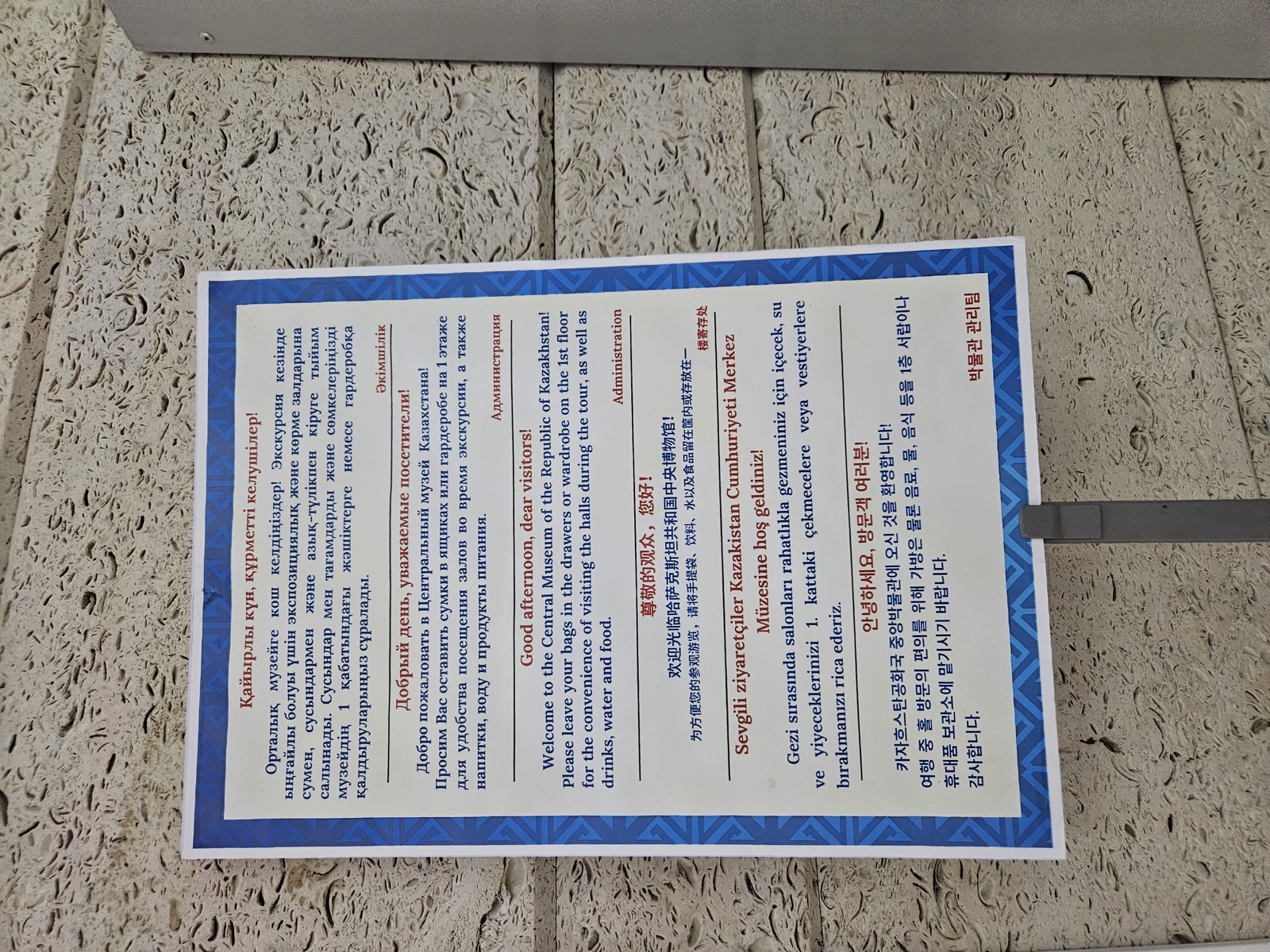
Kazakh Cyrillic includes letters that signal sounds not represented in standard Russian Cyrillic, including Ә ә, Ғ ғ, Қ қ, Ң ң, Ө ө and Ұ ұ. A reader who knows Russian may recognise many characters and some loanwords, but that visual familiarity does not provide automatic comprehension. The alphabet is a layer of writing history; it is not a family tree.
Why are both heard in Kazakhstan?
Kazakhstan has a complex multilingual history. Russian spread across the region during the Imperial Russian period (19th–early 20th century) and then more intensively during the Soviet era through settlement, education and industrialisation. Russian became the dominant language of administration, cities and higher education. Many Kazakhs — particularly urban and northern populations — grew up using Russian as a first language or primary working language.
Since independence in 1991, Kazakh has been promoted as the state language. Efforts to expand Kazakh-language education, media and official communication have produced generational differences: younger urban Kazakhstanis often have stronger Kazakh than their parents’ generation.
The legal roles are distinct: Kazakh is the state language; Russian has an officially defined role in public institutions.C2
The alphabet question
Kazakh has been written in several scripts over its history: Arabic-derived script (before Soviet era), then Latin (1929–1940), then Cyrillic (1940–present). Kazakhstan has been working on a transition back to Latin script, with a revised Kazakh Latin alphabet in development.
Russian uses its own Cyrillic alphabet, which is distinct from the Kazakh Cyrillic script — the two have different letters for sounds unique to each language.
Languages can share a writing system and remain unrelated. English and Vietnamese both use Latin-based alphabets. The Cyrillic connection is a historical artefact of Soviet policy, not evidence of linguistic kinship.C3
Bilingualism in practice
Many Kazakhstanis are bilingual or multilingual. Code-switching between Kazakh and Russian in a single conversation is common in cities. The term “Shala-Kazakh” is sometimes used — with varying registers of respect or criticism — for Kazakhstanis who are more comfortable in Russian than Kazakh. This reflects a real sociolinguistic pattern, not evidence that the languages are the same.
It is also important to separate ability from identity. A Kazakhstani may speak Russian at work, Kazakh with relatives, English in a university or a mixture of all three. Language preference varies by generation, region, education and family history. It cannot be reliably inferred from someone’s appearance or ethnicity.
Origin, use and policy are three different questions
“Are the languages related?” is a classification question. “Which language does someone use?” is a sociolinguistic question. “Which language should schools or public institutions use?” is a policy question. Kazakhstan’s public debate becomes harder to understand when all three are reduced to “Kazakh versus Russian.”
Russian’s broad use reflects imperial and Soviet history, education, urbanisation and family networks. The promotion of Kazakh reflects its status as the state language and the desire to strengthen a language that was institutionally disadvantaged during parts of the Soviet period. Neither fact makes bilingual citizens less Kazakhstani, and neither makes the two languages the same.
Assuming a Kazakhstani’s preferred language from their appearance, ethnicity or city of origin is likely to be wrong in either direction.
Better phrasing
Say “Kazakhstan is multilingual” rather than “everyone speaks Russian” or “Kazakh is Russian.” Avoid assuming a person’s preferred language from their ethnicity, city or appearance.
Where this claim appeared
- Duolingo community forums — Users asking whether learning Russian is enough to communicate in Kazakhstan receive mixed answers; some state the languages are “basically the same” (forum.duolingo.com)
- Reddit r/languagelearning — “Is Kazakh just Russian with a different alphabet?” appears as a recurring question, often upvoted (reddit.com/r/languagelearning)
- Travel blogs — Multiple popular travel posts advise readers that “Russian is the main language of Kazakhstan and Kazakh is similar,” conflating the two ([various travel blogs])
- Quora — “Is Kazakh similar to Russian?” has hundreds of thousands of views; top answers vary from accurate to entirely incorrect (quora.com)
- Google Translate UI — Auto-detection of Kazakh text as Russian (due to shared Cyrillic script) has reinforced the perception that the languages are related; reported by multiple Kazakh speakers on tech forums
Reader context
Comments
Comments are moderated before publication. Keep them specific, sourced and respectful.
No published comments yet. Add the first useful context.