The answer in 20 seconds
The Semipalatinsk Nuclear Test Site was closed by Kazakhstan in 1991. Remediation work has addressed specific contaminated zones. But the site is not uniformly safe: some areas remain contaminated, monitoring continues, and the long-term health effects on surrounding populations are still under active study by international researchers.C3
What happened at Semipalatinsk?
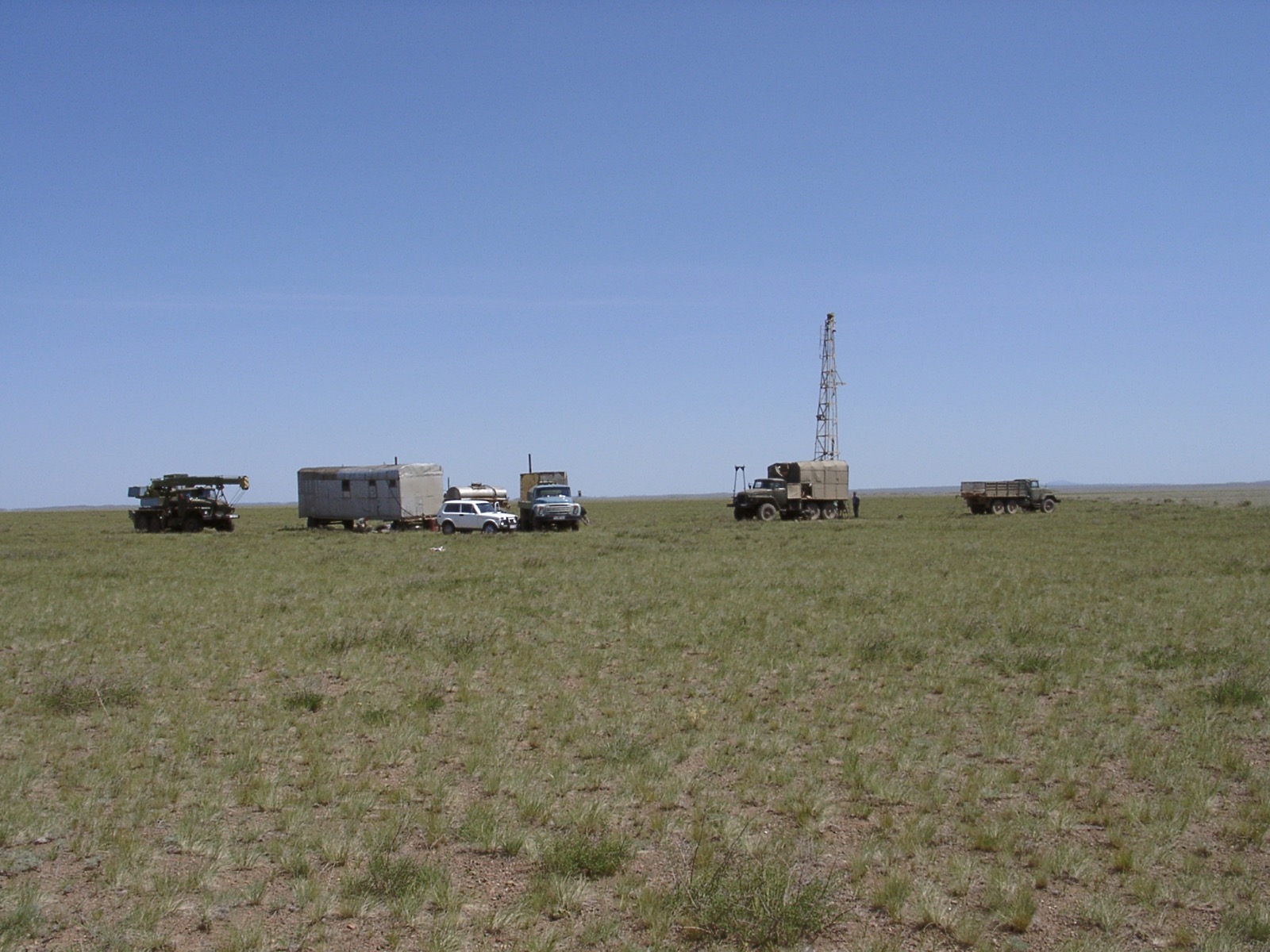
The Semipalatinsk Nuclear Test Site — known in Soviet times as “The Polygon” — was the primary nuclear weapons testing ground of the Soviet Union. Located in the north-east of what is now Kazakhstan, the site operated from 1949 to 1989.C1
456 nuclear tests were conducted, including:
- 116 atmospheric tests (1949–1963): explosions above or at ground level that produced significant fallout spread over surrounding regions
- 340 underground tests (1961–1989): mostly contained underground, but some vented radioactive material to the surface
The atmospheric tests exposed populations in surrounding areas — including the cities of Semey (formerly Semipalatinsk) and communities in Pavlodar, East Kazakhstan, and Altai regions — to radioactive fallout. An estimated 1.5 million people lived in areas affected by fallout during the testing period.
How was the site closed?
On 29 August 1991, Kazakh president Nursultan Nazarbayev signed a presidential decree unilaterally closing the test site — without waiting for Moscow’s approval and before the Soviet Union formally dissolved.C2
This decision was driven by a significant civil society movement: Nevada-Semipalatinsk, an anti-nuclear organisation founded in 1989 by poet Olzhas Suleimenov, became one of the most powerful civic movements of the late Soviet era. The closure made Kazakhstan a central figure in global non-proliferation diplomacy.
29 August is now observed internationally as the UN International Day Against Nuclear Tests.
Is the site safe now?
The answer depends on which part of the site and which question is being asked.C3
Areas that have been assessed or remediated:
- The CTBTO and Kazakhstan’s National Nuclear Center have conducted extensive surveys and designated specific zones as safe for limited uses including scientific research and, in some areas, agriculture or grazing.
- Some underground test tunnels have been sealed and collapsed.
Areas that remain contaminated or monitored:
- Elevated radiation levels persist in some zones around former ground-zero points and underground test shafts.
- The IAEA has provided monitoring equipment and technical assistance for ongoing radiation surveillance.
- Certain areas remain restricted or require dosimetric control for visitors.
The site spans approximately 18,500 km² — an area larger than many European countries. Treating it as uniformly safe or uniformly dangerous ignores its geographic scale and internal variation.
What are the ongoing health effects?
International research on health effects in exposed populations continues. The IARC-WHO SEMI-NUC programme is conducting long-term studies of cancer incidence, thyroid disease, and other conditions in populations that lived near the test site during the testing period.C4
Research findings have documented elevated rates of:
- Certain cancers (including oesophageal cancer and some leukaemias) in heavily exposed communities
- Thyroid abnormalities
- Possible effects on subsequent generations, though the evidence for transgenerational effects remains under study
The research is ongoing, and results from different studies have sometimes varied. This is not a closed scientific question.
What can be said accurately
- Kazakhstan closed Semipalatinsk in 1991 in an act of significant political courage.C2
- Remediation work has addressed specific contaminated zones, and parts of the site are safe for defined uses.C3
- Other zones remain contaminated and require monitoring.
- Health effects on affected populations are real, documented, and continue to be studied.C4
- “Completely safe” and “still an emergency” both misrepresent a complex, spatially variable situation.C5
Where this claim appeared
- Tourism materials and travel blogs — Some texts promoting tourism to the Semey region describe the test site as “fully remediated” or “safe to visit” without noting ongoing monitoring requirements
- Reddit r/geography and r/history — Questions about Semipalatinsk frequently produce responses saying it is “cleaned up now” with no mention of ongoing research (reddit.com/r/history)
- The Guardian (2011) — A piece on Central Asian nuclear legacy quoted officials describing remediation progress without noting the site’s scale and remaining contaminated zones (theguardian.com)
- Vice News (2017) — A documentary on Semipalatinsk took the opposite approach, framing the entire region as still acutely dangerous — equally misleading in the other direction (vice.com)
- Wikipedia “Semipalatinsk Test Site” — The article is generally accurate but has been repeatedly simplified in edits to imply either full safety or ongoing emergency; the current version reflects the nuanced picture more accurately
Reader context
Comments
Comments are moderated before publication. Keep them specific, sourced and respectful.
No published comments yet. Add the first useful context.