The answer in 20 seconds
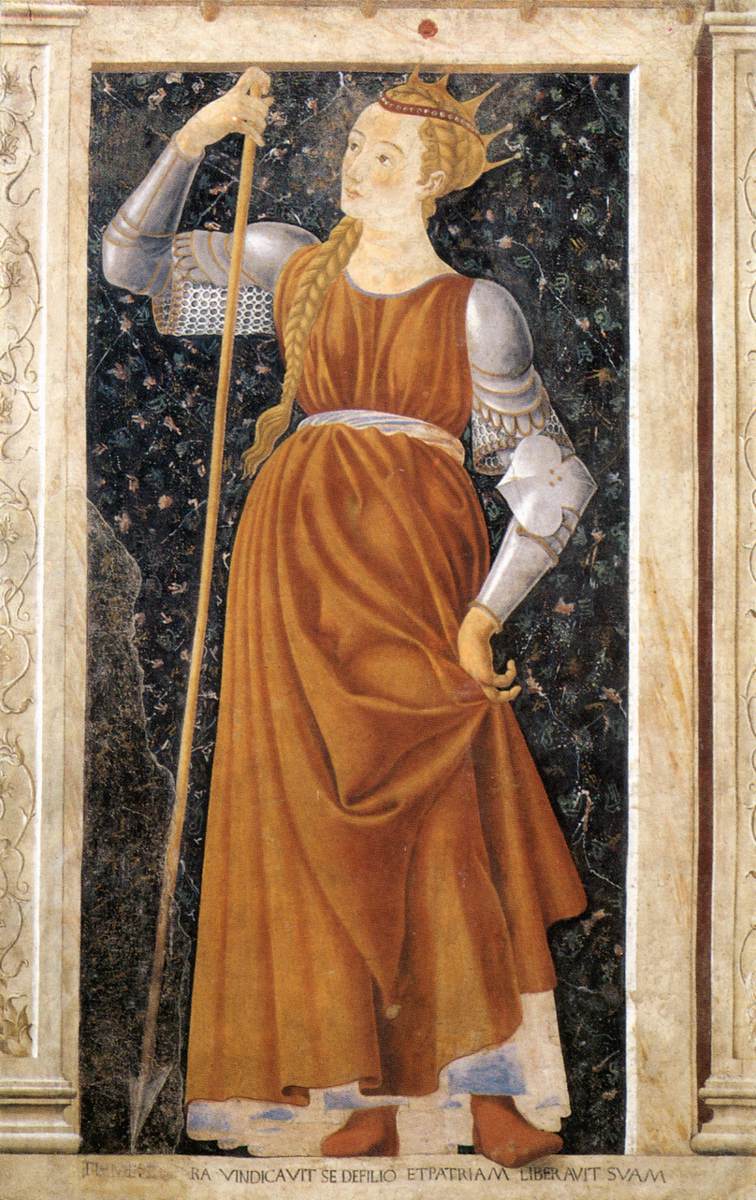
Tomyris was a queen described by Herodotus as ruler of the Massagetae, a nomadic steppe people who lived in the region east of the Caspian Sea — territory that geographically overlaps with parts of modern Kazakhstan.C1
She is celebrated as a national cultural figure in Kazakhstan. But calling her “Kazakh” applies a 21st-century national identity to a 6th-century BCE historical context. The Kazakh people and Kazakh ethnic identity emerged more than a thousand years after her time.C3
Who was Tomyris?
Tomyris appears primarily in Book I of Herodotus’s Histories (written c. 430 BCE). According to Herodotus, she was the queen of the Massagetae, a nomadic steppe people east of the Caspian Sea.C1
The Histories describe her military confrontation with Cyrus the Great of Persia, who had expanded his empire far into Central Asia. When Cyrus attempted to cross the Araxes River and invade Massagetae territory, Tomyris reportedly warned him to withdraw. He did not. The battle that followed resulted in the death of Cyrus — one of the most famous military reversals in ancient history.
Herodotus presents the story with evident dramatic flair, and ancient historians have long debated its reliability. The account is our primary (and essentially only) detailed textual source on Tomyris. Archaeological evidence for the Massagetae exists but does not directly confirm or deny the Herodotean account.
Who were the Massagetae?
Ancient sources — primarily Herodotus — describe the Massagetae as a nomadic people living east of the Caspian Sea, in the area that geographers variously place in what is now Kazakhstan, Uzbekistan, or western Central Asia.C2
The exact ethnic and linguistic affiliation of the Massagetae is debated. They are often placed in the broad category of Iranian-speaking steppe nomads (Saka/Scythian cultural sphere), though some scholars propose Turkic connections. No contemporary Massagetae texts survive; everything we know comes from outside observers.
The connection to Kazakhstan is geographic: the Massagetae lived in the steppe region that is now part of Kazakhstan. This is meaningful but different from claiming ethnic or national continuity.
The anachronism problem
The Kazakh people as a distinct ethno-political entity emerged in the medieval period — historians typically place the formation of a Kazakh identity in the 13th–15th centuries CE, associated with the fragmentation of the Mongol Empire and the formation of the Kazakh Khanate around 1465.C3
This means there is a gap of roughly 2,000 years between Tomyris’s time and the emergence of Kazakh identity. During that period, the steppe was home to numerous successive nomadic peoples — Saka/Scythians, Sarmatians, Huns, Göktürks, Khazars, Kipchaks — none of whom were “Kazakh” in any meaningful sense.
Calling Tomyris “Kazakh” is an anachronism — applying a category to a time when it did not exist.C4 It is the equivalent of calling Julius Caesar “Italian” or Boudicca “British.”
Why does this matter?
There are two different claims that can be made about Tomyris:
Cultural claim (valid): Tomyris is a significant figure in Kazakhstani national memory and culture. She represents a tradition of powerful steppe rulers and warrior queens who are part of the historical narrative that modern Kazakhstan inherits from the geography it occupies. The 2019 Kazakhfilm epic Tomyris and numerous cultural commemorations reflect this genuine and meaningful cultural connection.C5
Historical identity claim (misleading): Tomyris was ethnically or nationally Kazakh in the same sense as a modern citizen of Kazakhstan. This claim does not hold up historically, because Kazakh identity did not exist in 530 BCE.C4
The difference matters because it shapes how history is understood. Claiming ancient figures as modern national ancestors can slide from legitimate cultural heritage recognition into historical revisionism if the anachronism is not acknowledged.
What can be said accurately
- Tomyris was queen of the Massagetae according to Herodotus; the historical account has uncertain reliability.C1
- The Massagetae inhabited the steppe east of the Caspian, geographically overlapping with modern Kazakhstan.C2
- The Kazakh people emerged in the medieval period, roughly 2,000 years after Tomyris’s time.C3
- Tomyris is a meaningful figure in Kazakhstani cultural heritage — this is different from claiming she was ethnically Kazakh.C5
- Describing Tomyris as “Kazakh” is an anachronism.C4
Where this claim appeared
- Kazakhfilm “Tomyris” (2019) — The widely seen historical epic depicted Tomyris as a proto-Kazakh figure; the film was criticised by some historians for anachronistic representations while praised for cultural ambition (kazakhfilm.kz)
- Kazakhstan Tourism and cultural promotion — Official materials describe Tomyris as part of Kazakhstan’s cultural heritage; the distinction between geographic heritage and ethnic identity is not always clearly drawn
- Reddit r/history — “Tomyris was Kazakh” appears in historical discussions; corrections noting the anachronism receive limited engagement (reddit.com/r/history)
- Wikipedia “Tomyris” — The article has seen edits attempting to categorise her as Kazakh; current version describes her as “queen of the Massagetae” without modern national labelling
- Social media — Kazakhstani national pride posts frequently describe Tomyris as Kazakh without the anachronism caveat; this is understandable cultural context but misleading as historical statement
Reader context
Comments
Comments are moderated before publication. Keep them specific, sourced and respectful.
No published comments yet. Add the first useful context.