The answer in 20 seconds
Kazakhstan was part of the Silk Roads network. UNESCO’s transnational Chang’an–Tianshan corridor includes sites in Kazakhstan, China and Kyrgyzstan.C1
A network, not a single road
The phrase “Silk Road” is a modern shorthand for many routes that shifted over time. Traders, pilgrims, diplomats, craftspeople and ideas moved through different valleys and passes depending on politics, climate and local power. The network connected rather than simply transported goods from one endpoint to another.
Kazakhstan’s place in the corridor
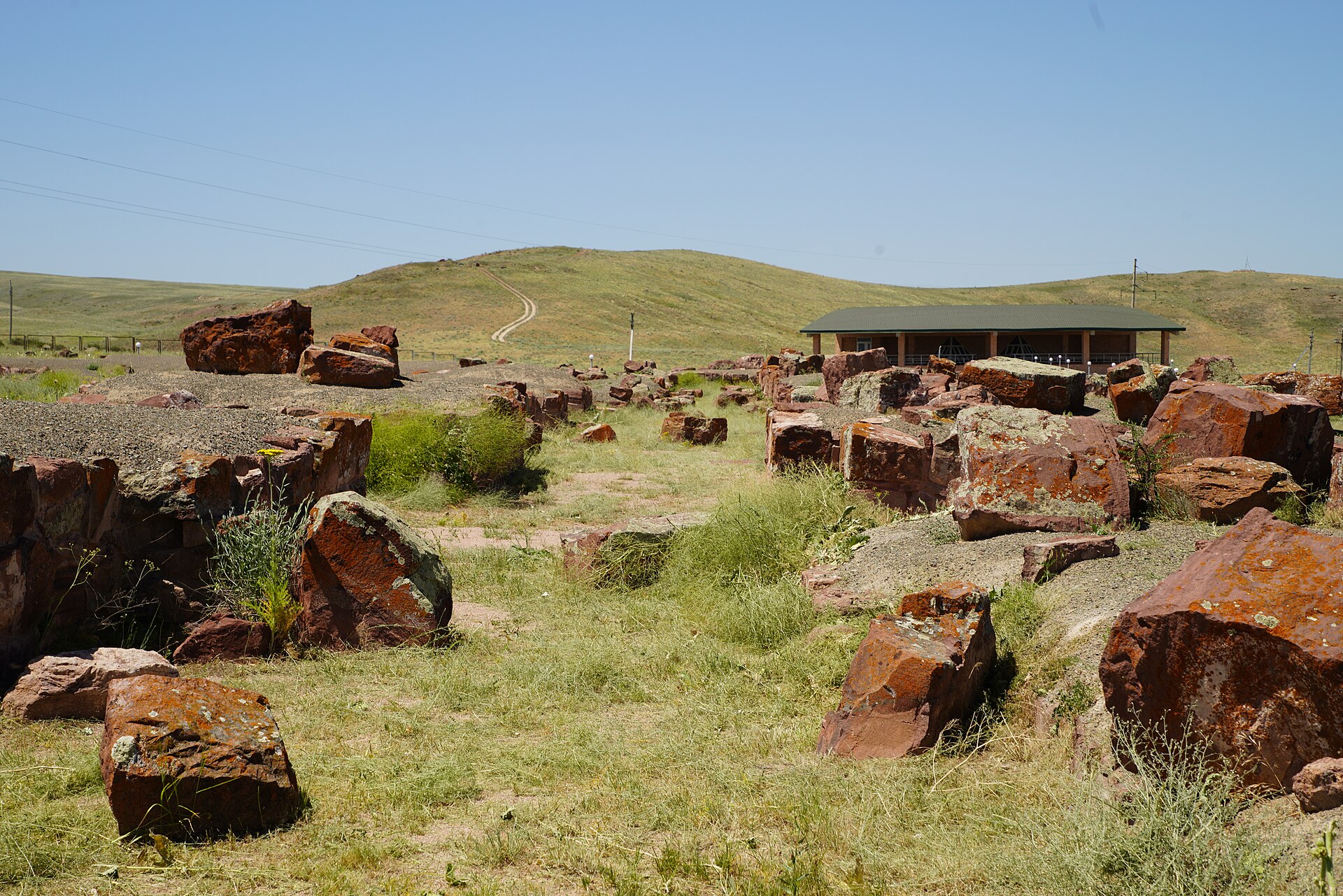
UNESCO describes routes through the Tian Shan and the Zhetysu region, including archaeological and historic sites in modern Kazakhstan. Akyrtas near Taraz is one of the recognised components. The evidence is not that every kilometre of Kazakhstan was a marketplace; it is that important routes and settlements crossed the region.C2
Cities, not empty space
The strongest evidence comes from places where movement left a material record. Otrar developed near the Syr Darya and became an important settlement in the wider Central Asian network. Taraz and the Talas valley connected routes moving between the steppe, the Tian Shan and oasis centres farther south. Sites such as Akyrtas show monumental construction and long-distance cultural connections rather than an isolated landscape with no organised exchange.C1
These routes carried much more than silk. Traders moved horses, metals, textiles, ceramics, paper, spices and foodstuffs. Religious ideas, scripts, artistic styles, technologies and diplomatic messages travelled with them. The network changed over centuries: routes became more or less important as politics, climate and local power shifted.
What the evidence can and cannot prove
Archaeology can show settlements, roads, fortifications, coins, imported objects and patterns of construction. UNESCO recognition helps identify sites with documented historical significance, but it does not mean every claim about a site is equally certain or that modern borders existed in the past. The careful wording is that routes crossed regions within Kazakhstan today.
This makes the correction stronger. Kazakhstan was not the whole Silk Roads, but parts of present-day Kazakhstan were important places within a broader, multi-centred system of exchange.C3
The corridor also helps explain why Central Asian history cannot be divided neatly into “Chinese” and “European” stories. Local communities, steppe societies and settled cities shaped the exchanges themselves. Goods and ideas were adapted locally, and political power moved between different centres over time. That is a more accurate picture than imagining one line running across an otherwise empty country.
A measured conclusion
The evidence supports a strong but bounded claim: Kazakhstan contains important Silk Roads sites and corridors. It does not require claiming that every settlement was wealthy, that every route operated continuously, or that a modern national identity can simply be projected backwards onto medieval travellers. It is a claim about connection, evidence and historical geography, not about ownership of the past. That bounded claim is both historically defensible and easy for readers to remember today.
Better wording
Say “Kazakhstan contains important Silk Roads corridors and sites”, not “the Silk Road bypassed Kazakhstan.”C3
Where this claim appeared
- Wikipedia “Silk Road” article — Earlier versions of the article routed Silk Road maps primarily through Persia and China without clearly showing Central Asian cities; revisions since 2015 have improved this (wikipedia.org/wiki/Silk_Road)
- National Geographic Silk Road documentary series — Major episodes focused on Chinese and Persian ends of the routes; Kazakhstan-side cities received little screen time, reinforcing the “empty middle” perception
- Reddit r/history — “Where did the Silk Road actually go?” threads rarely mention Taraz, Turkestan, or Otrar among the responses (reddit.com/r/history)
- History.com Silk Road articles — Mainstream explainers emphasize China, Persia, and Rome as Silk Road endpoints; Kazakhstan’s role as a transit zone is omitted or compressed to a single sentence (history.com)
- School curriculum materials (US and EU) — Analysis of widely used textbooks shows Silk Road maps ending at the Caspian, cutting out Central Asian interior cities entirely; documented in OSCE educational reports
Reader context
Comments
Comments are moderated before publication. Keep them specific, sourced and respectful.
No published comments yet. Add the first useful context.