The answer in 20 seconds
As of July 2026, Kazakhstan has seven UNESCO World Heritage properties: four cultural and three natural. UNESCO also records 14 intangible cultural heritage elements associated with Kazakhstan. Together they cover architecture from the 14th–15th centuries, prehistoric rock art, Silk Road archaeology, steppe, mountain and desert ecosystems, sacred sites, music, craft and living ritual.C0C7
Why the stereotype exists
Kazakhstan is less covered in international arts and travel media than European, East Asian or Middle Eastern destinations. Its cultural output does not circulate widely in English-language media. Borat-era associations create a fictional Kazakhstan with no recognized culture. And the country’s nomadic heritage — which produced remarkable portable arts, oral traditions and material culture — is systematically underrepresented in Western museum and heritage frameworks compared to sedentary civilisations that left stone buildings.
None of that means culture is absent. It means it is underreported.
UNESCO World Heritage: Mausoleum of Khoja Ahmed Yasawi
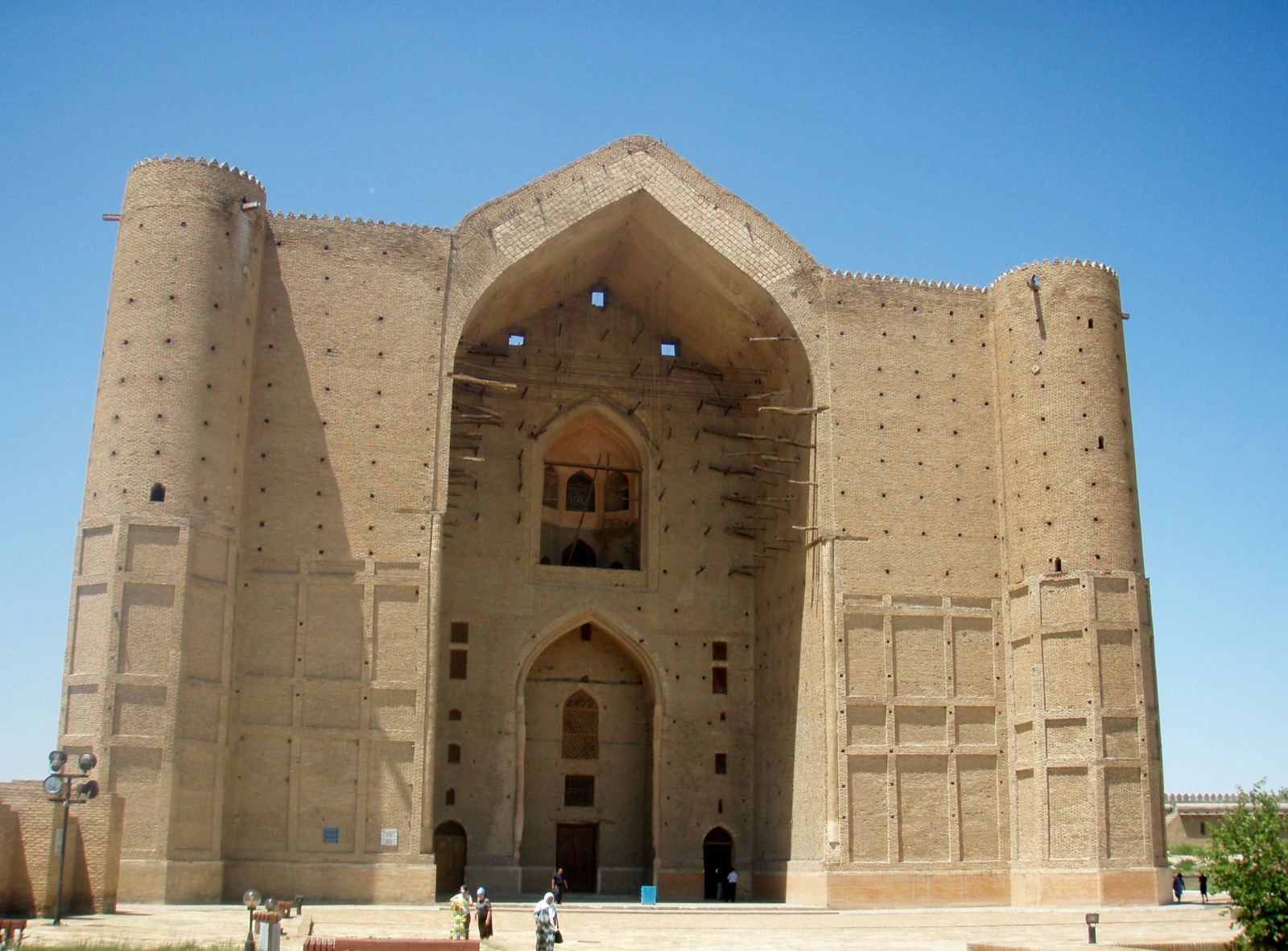
The mausoleum in Turkestan city is one of the earliest and best-preserved examples of Timurid architecture anywhere in Central Asia. It was commissioned by Timur (Tamerlane) in the 14th century over the grave of the 12th-century Sufi poet and religious teacher Khoja Ahmed Yasawi, whose influence on Turkic Islamic culture was profound.C1
UNESCO inscribed it in 2003, citing:
- Outstanding architectural craftsmanship
- Historical significance as a pilgrimage destination
- Its position as a prototype for later mosque and mausoleum architecture in the region
The building’s unfinished state — Timur died before completion — is itself historically significant, preserving evidence of construction techniques not visible in finished structures.
UNESCO World Heritage: Petroglyphs of Tamgaly
About 170 kilometres north-west of Almaty, the Tamgaly gorge contains one of the most significant concentrations of Bronze Age rock carvings in Central Asia. Over 5,000 individual petroglyphs depict humans, animals, ritual scenes and calendrical symbols from approximately 1,400 BCE to the early 20th century CE.C2
UNESCO inscribed the site in 2004, recognising it as evidence of:
- Settled pastoral and ritual life in the pre-nomadic steppe period
- A continuity of cultural occupation spanning more than 3,000 years
- An exceptional density and preservation of open-air rock art
UNESCO World Heritage: Silk Roads
Kazakhstan’s territory includes several key sections of the historic Silk Road network connecting China with Central Asia, the Mediterranean and beyond. These routes were not just commercial highways but cultural corridors — moving goods, ideas, religions and technologies across the Eurasian continent for more than a thousand years.C3
The 2014 UNESCO inscription of the Silk Roads: Chang’an-Tianshan Corridor is a transnational listing involving China, Kazakhstan and Kyrgyzstan. The Kazakh sections include ancient urban centres, caravanserais, and the routes that connected what is now Almaty (then Almatu / Almalik) to the wider network.
Three natural World Heritage properties
The Saryarka — the steppe and lake district of northern Kazakhstan — was inscribed as UNESCO World Natural Heritage in 2008.C4 It is now one of three natural properties connected to Kazakhstan, alongside Western Tien-Shan and the transnational Cold Winter Deserts of Turan.C5
The site is recognised for:
- Being one of the last large intact temperate steppe ecosystems in the world
- Providing critical habitat for rare migratory waterbirds, including Siberian cranes, Dalmatian pelicans and white-headed ducks
- Supporting globally threatened species of steppe mammals and birds
The Saryarka demonstrates that Kazakhstani heritage is not limited to human-built history.
The 2026 addition: Mangystau’s sacred landscape
In July 2026, UNESCO inscribed the Rock Mosques and Associated Sacred Sites of Mangystau. The serial property brings together rock-cut mosques, necropolises and pilgrimage landscapes shaped by Sufi practice and local communities. It became Kazakhstan’s seventh World Heritage property.C6
The timing matters: any source that still says Kazakhstan has four or six World Heritage properties is describing an earlier version of the list, not the current one.
UNESCO Intangible Cultural Heritage
World Heritage properties are places. UNESCO’s Intangible Cultural Heritage lists cover living practices and knowledge. The current Kazakhstan state page records 14 elements.C7 Examples include:
- Yurt-making knowledge and skills — The traditional knowledge and craftsmanship involved in constructing Kazakh (and Kyrgyz and Karakalpak) yurts was inscribed as UNESCO Intangible Cultural Heritage in 2014. It recognises craft knowledge, symbolic decoration systems and the community transmission of technical skills.
- Nauryz — The spring new year celebration, observed widely across Central Asia, Iran and beyond, was inscribed as UNESCO Intangible Cultural Heritage in 2016 as a jointly submitted element by multiple countries, including Kazakhstan.
- Dombra kuy — Instrumental performance on the two-stringed dombra, inscribed in 2014.
- Betashar — A traditional wedding ritual, inscribed in 2024.
Beyond UNESCO: what else exists
UNESCO recognition is a useful shorthand, but it does not define all cultural value. Kazakhstan also has:
- Oral epic tradition — The Kazakh zhyrau (court poets and bards) produced a tradition of oral epic literature that continues today, transmitted through professional performers.
- Dombra music — The two-stringed plucked instrument is central to Kazakh musical identity; the repertoire includes instrumental pieces (küy) and vocal-instrumental traditions.
- Nomadic textile arts — Felt-making (producing shyrdak and other floor textiles), decorative embroidery and woven textiles represent sophisticated material culture.
- Architectural heritage — Beyond Turkestan, Kazakhstan has significant examples of medieval Islamic architecture, Soviet-era modernism and contemporary architecture in Astana.
What can be said accurately
- Kazakhstan has multiple UNESCO-recognised heritage sites, covering archaeology, architecture, ecology and intangible traditions.
- Its cultural heritage includes both ancient contributions (Silk Road cities, rock art) and living practices (yurt-making, oral poetry, dombra music).
- International underrepresentation of Kazakhstani culture in global media does not mean the culture is absent.
Accurate wording
Say “Kazakhstan has UNESCO World Heritage Sites and a recognized cultural tradition including Silk Road archaeology, Timurid architecture and nomadic arts”, not “Kazakhstan has no notable culture or heritage.”
Where this claim appeared
- Reddit r/AskHistorians — Multiple threads about Central Asian history acknowledge Kazakhstan primarily through its Soviet history, rarely mentioning the Mausoleum of Khoja Ahmed Yasawi or Tamgaly (reddit.com/r/AskHistorians)
- Travel forums — Discussions about what to see in Kazakhstan frequently mention only Almaty and Astana, without reference to Turkestan or UNESCO-listed sites
- AI assistants — Multiple reports from users note that AI tools fail to mention Kazakhstan’s UNESCO heritage when asked general questions about the country’s culture
- International news coverage — Kazakhstan most commonly appears in news about energy, geopolitics or post-Soviet context; cultural coverage is rare
Reader context
Comments
Comments are moderated before publication. Keep them specific, sourced and respectful.
No published comments yet. Add the first useful context.